Credit: Shutterstock
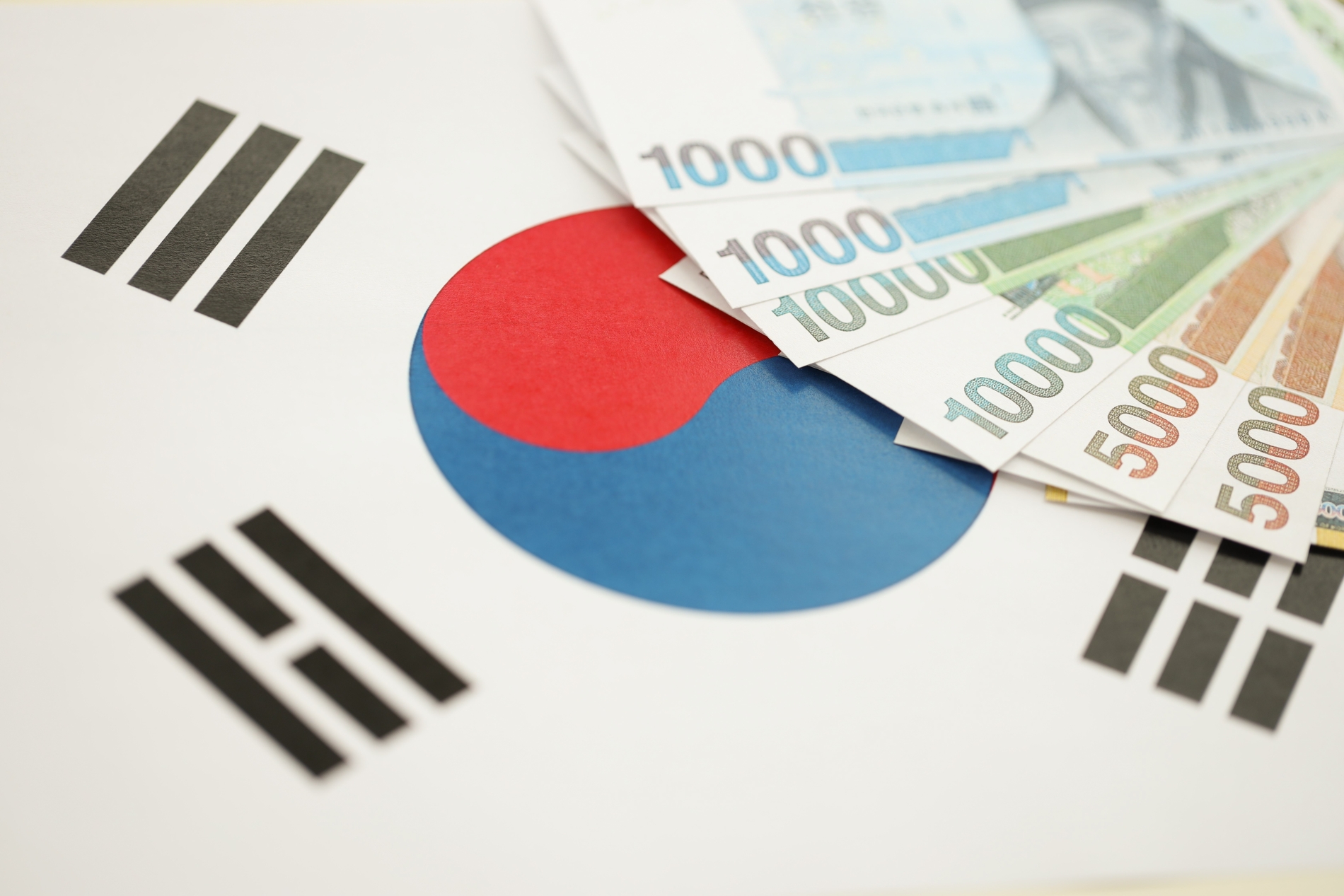
South Korea took swift action on July 21 to address recent volatility in its currency markets. The Korean Won experienced fluctuations that prompted the Ministry of Finance to call an urgent meeting with major exporters, including Samsung, SK Hynix, and Hyundai. The goal was to implement measures that would stabilize the currency and support overall market confidence.
Exporters Summit
The Ministry of Finance convened a meeting with top Korean conglomerates to discuss strategies for reducing currency pressure. These companies play a key role in the economy, as their overseas revenues significantly impact the value of the Won. During the summit, officials encouraged firms to convert a portion of their foreign currency holdings and export proceeds back into local currency. This coordinated effort aimed to ease the demand on the Won and prevent sharp swings that could affect businesses and investors alike.
FX Market Normalization
By asking companies to repatriate dollars from overseas operations, South Korea sought to normalize foreign exchange market conditions. Large inflows of dollars can create imbalances, causing the Won to weaken or strengthen rapidly. The Ministry’s guidance was intended to reduce sudden currency swings and give market participants a clearer signal of stability. Analysts noted that this approach can help smooth out short-term volatility without resorting to heavy-handed interventions.
Economic Outlook
South Korea also updated its economic projections in the context of currency stability. The government raised its 2026 current account surplus forecast to $290 billion. This positive outlook is largely supported by strong demand for semiconductors, a key export sector for the country. Robust export performance provides a buffer for the Won, helping anchor financial stability even amid global market uncertainty. The combination of government coordination and strong exports offers confidence that the economy can manage moderate currency fluctuations.
Importance for Businesses
Currency stability is critical for Korean exporters and domestic companies. Sharp swings in the Won can affect profit margins, pricing strategies, and investment plans. By encouraging controlled conversion of foreign revenues, the government helps companies manage risks while maintaining competitiveness in global markets. Stable exchange rates also support smoother planning for capital expenditures and financial operations.
Broader Market Implications
South Korea’s intervention highlights the role of government and corporate coordination in maintaining financial stability. Currency fluctuations are a normal part of global markets, but sharp swings can disrupt trade and investment. Coordinated measures provide reassurance to investors and trading partners, signaling that the country is taking proactive steps to support its financial system.
Looking Ahead
While the intervention is designed to address immediate volatility, ongoing monitoring will be needed. Economic factors such as semiconductor demand, global trade conditions, and geopolitical developments can continue to influence the Won. By keeping a close watch on these variables, South Korea aims to maintain orderly currency markets and protect economic growth.
South Korea’s quick response to recent Won volatility demonstrates how government and industry can work together to stabilize currency markets. Through coordinated actions, the country supports exporters, promotes market confidence, and positions itself for sustained financial stability in the months ahead.

-
 The global economy has handled several major shocks better than many economists initially expected. But International Monetary Fund Managing...
 -
Global oil markets started September with another sharp reminder of just how quickly geopolitical tension can move energy prices....
-
Two very different parts of the financial market moved higher this week. Global oil prices climbed to their highest...
-
The Federal Reserve’s July meeting minutes have given investors a clearer look at what policymakers are thinking about inflation...
-
Oil prices jumped sharply on August 10 as uncertainty surrounding shipping through the Strait of Hormuz returned to the...
-
The first week of August brought a fresh wave of attention to India’s economy. The Reserve Bank of India...
-
Global financial markets experienced fresh movement as oil prices climbed, Treasury yields shifted, and investors looked for stability following...
-
The Bank of Canada (BoC) has decided to keep its benchmark overnight interest rate steady at 2.25% for the...
-
The U.S. dollar surged in early July as investors sought safety amid ongoing geopolitical tensions in the Gulf. The...
-
As the United States prepares to celebrate Independence Day, financial markets take a pause. In 2026, the holiday falls...
-
The Japanese yen has fallen to its weakest level against the U.S. dollar in nearly four decades, marking a...
-
Global stock markets experienced a wave of optimism following the announcement of a diplomatic breakthrough aimed at stabilizing key...