

Credit: Shutterstock
The global economy has handled several major shocks better than many economists initially expected.
But International Monetary Fund Managing Director Kristalina Georgieva is warning that resilience shouldn’t be mistaken for safety.
One of the biggest concerns is government debt. Global public debt is already close to 100% of the world’s GDP, and the IMF expects it to reach that level by 2029.
For governments, central banks and investors, that creates an increasingly difficult balancing act.
Global Debt Keeps Climbing
Georgieva recently compared the world’s debt trajectory to a staircase.
Whenever a major crisis arrives, governments borrow heavily to support households, businesses and the wider economy. Debt jumps to a new level.
The problem comes afterward.
Instead of falling significantly when conditions improve, debt often stays elevated until the next crisis pushes it another step higher.
The pandemic, energy shocks, defense spending, social pressures and higher borrowing costs have all contributed to the current situation.
Why 100% of GDP Matters
There isn’t one magical debt level that suddenly makes every economy unsafe.
Some countries can comfortably manage larger debt burdens than others.
The concern is what happens when high debt combines with high interest rates.
Governments must spend more simply servicing what they already owe. That can leave less money available for infrastructure, healthcare, education and other priorities.
Developing economies can face an even tougher situation because rising yields in major economies can pull international investment toward markets offering attractive returns with lower perceived risk.
Central Banks Have a Difficult Job
Higher government debt also creates complications for central banks.
If inflation remains elevated, policymakers may need to keep interest rates higher for longer.
But higher rates increase borrowing costs across the economy, including for governments carrying enormous amounts of debt.
The BIS has warned that high public debt can make monetary policy transmission more complicated and increase the risk of instability in government bond markets.
Central banks therefore have to control inflation without creating unnecessary financial stress.
Hormuz Is Still an Inflation Risk
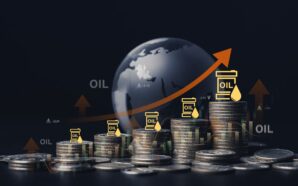
Energy remains another major part of the problem.
The Strait of Hormuz has experienced prolonged disruption during the Middle East conflict, affecting one of the world’s most important energy corridors.
Higher oil and gas prices can quickly spread through economies.
Transportation becomes more expensive, manufacturers face higher costs, and households eventually feel the pressure through fuel, electricity and other prices.
The IMF has warned that the energy shock isn’t over, particularly as countries eventually need to rebuild strategic oil and gas reserves.
AI Is Competing for Capital Too
At the same time, another enormous investment cycle is underway.
Companies are spending heavily on artificial intelligence, data centers, semiconductor infrastructure and the electricity systems needed to support them.
That investment can strengthen economic growth and eventually improve productivity.
But there is another side to it.
AI infrastructure requires huge amounts of capital. When governments are also issuing large quantities of debt, both the public and private sectors are effectively competing for investors’ money.
That can contribute to upward pressure on longer-term borrowing costs.
Developing Economies Could Feel It Most
The combination becomes particularly difficult for emerging and lower-income economies.
Higher global interest rates make refinancing debt more expensive. Expensive energy increases import bills for countries dependent on foreign oil and gas.
Meanwhile, investors may prefer higher-yielding assets in developed economies.
Countries already carrying large debts can therefore find themselves spending more on interest while having less room to invest in growth.
That’s how a debt problem can gradually become a debt trap.
Governments Need to Rebuild Their Buffers
The IMF isn’t suggesting that governments should suddenly stop spending.
Instead, it argues that countries need credible plans for bringing public finances onto more sustainable paths.
That means using stronger economic periods to rebuild fiscal buffers rather than waiting until another crisis arrives.
Cuts also need to be carefully designed. Reducing productive investment too aggressively can weaken future growth, which can actually make debt harder to manage.
The Next Economic Challenge Is About Balance
The global economy is dealing with several expensive priorities at once.
Governments need energy security, defense spending and stronger infrastructure. Businesses are investing billions in AI. Households are still dealing with elevated living costs, while countries must also service debts accumulated during earlier crises.
None of these pressures exists independently.
Higher energy prices affect inflation. Inflation influences interest rates. Higher rates increase government debt costs, while huge AI investments compete for the same global capital.
That is why the IMF’s debt warning matters.
The danger isn’t simply that the world owes more money than before. It’s that governments may have less room to respond when the next major shock inevitably arrives.

-
 Oil prices surged again on September 28 as hopes for a quick resolution to the U.S.-Iran conflict weakened and...
-
The U.S. 10-year Treasury yield has pushed through the closely watched 5% level, adding another challenge for investors already...
-
Rocket Lab has completed a $1.944 billion at-the-market equity offering as it moves closer to acquiring satellite communications company...
-
Global oil markets started September with another sharp reminder of just how quickly geopolitical tension can move energy prices....
-
Two very different parts of the financial market moved higher this week. Global oil prices climbed to their highest...
-
The Federal Reserve’s July meeting minutes have given investors a clearer look at what policymakers are thinking about inflation...
-
Oil prices jumped sharply on August 10 as uncertainty surrounding shipping through the Strait of Hormuz returned to the...
-
The first week of August brought a fresh wave of attention to India’s economy. The Reserve Bank of India...
-
Global financial markets experienced fresh movement as oil prices climbed, Treasury yields shifted, and investors looked for stability following...
-
South Korea took swift action on July 21 to address recent volatility in its currency markets. The Korean Won...
-
The Bank of Canada (BoC) has decided to keep its benchmark overnight interest rate steady at 2.25% for the...
-
The U.S. dollar surged in early July as investors sought safety amid ongoing geopolitical tensions in the Gulf. The...