Credit: Shutterstock
The 18th BRICS Summit concluded in New Delhi on September 13 after two days of discussions involving some of the world’s largest emerging economies.
Hosted by India, the summit brought leaders together under the theme “Building for Resilience, Innovation, Cooperation and Sustainability.”
Trade, financial cooperation, geopolitical tensions, technology, energy, and reform of international institutions all featured prominently.
At the same time, another diplomatic realignment was gathering momentum thousands of miles away, with Canada signaling that it wants a much deeper economic and security relationship with the European Union.
BRICS Expands Its Global Role
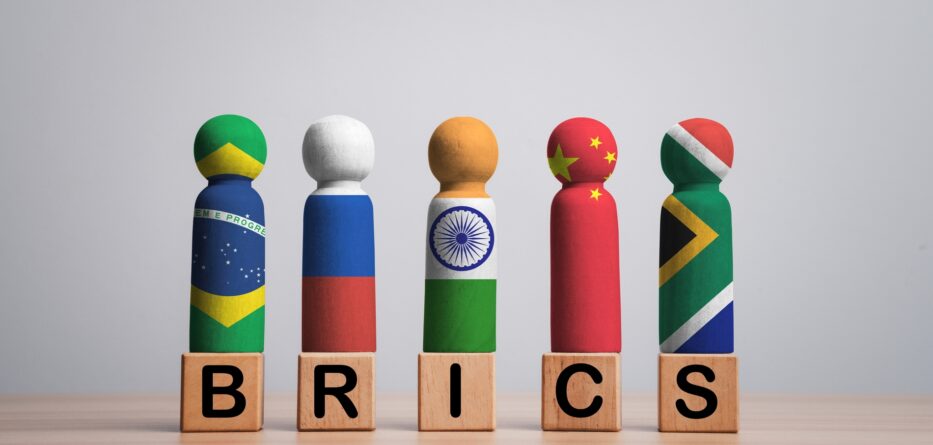
BRICS has changed considerably from the original grouping of Brazil, Russia, India, China, and South Africa.
The expanded bloc now includes 11 full members and represents roughly half of the world’s population.
That gives discussions about trade, finance, energy, and international governance considerably more weight than they carried when BRICS was first established.
This year’s summit ended with leaders adopting the New Delhi Declaration, outlining areas where members intend to deepen cooperation.
Cross-Border Payments Remain a Priority
One important topic was how BRICS countries conduct trade with one another.
The group supported greater use of local currencies in international transactions alongside efforts to improve cross-border payment systems.
This doesn’t mean BRICS has agreed to create a single currency.
Instead, the focus remains on making transactions between member countries easier and potentially reducing dependence on existing international payment channels.
For businesses trading across emerging markets, faster and less expensive settlement systems could eventually become particularly important.
Trade Resilience Moves Higher on the Agenda
Supply-chain disruptions have also changed the conversation.
Indian Prime Minister Narendra Modi warned that geopolitical tensions, climate disasters, pandemics, and supply disruptions increasingly affect countries far beyond where a crisis begins.
BRICS leaders called for global value chains to become more resilient, predictable, transparent, and inclusive.
Technology and critical minerals were part of that discussion too.
As countries compete for semiconductors, battery materials, AI infrastructure, and energy resources, access to technology has increasingly become a geopolitical issue rather than simply a business concern.
Iran and UAE Leaders Hold Important Talks
One of the summit’s notable diplomatic moments came on the sidelines.
Iranian President Masoud Pezeshkian met Sheikh Khaled bin Mohamed bin Zayed Al Nahyan, Crown Prince of Abu Dhabi, who led the UAE delegation.
The two discussed regional and international developments and emphasized the importance of reducing tensions and strengthening regional stability.
The meeting was particularly significant given wider tensions in the Middle East.
BRICS itself also called for disputes to be handled through dialogue and diplomacy.
Security Goes Beyond Military Cooperation
The summit’s definition of security was broad.
Leaders discussed traditional geopolitical conflicts, but they also focused on energy security, resilient supply chains, health preparedness, digital infrastructure, and food security.
One initiative announced during the summit involves creating an integrated early-warning system for infectious diseases.
That reflects a wider lesson from recent years.
Economic and national security are increasingly connected to whether countries can maintain access to energy, technology, medicines, food, data, and essential goods during a crisis.
Canada Looks Toward Europe
While BRICS countries were discussing stronger cooperation in New Delhi, Canada was making its own moves toward deeper international alignment.
Prime Minister Mark Carney has said Canada isn’t seeking membership of the European Union.
Instead, he wants what he has described as a “unique alliance” between Canada and the bloc.
The relationship could deepen cooperation across trade, investment, defense, energy, artificial intelligence, critical minerals, and digital infrastructure.
Canada is also looking to diversify its international relationships at a time of greater uncertainty in global trade.
The Relationship Is Already Growing
Canada and Europe aren’t starting from scratch.
The European Union is already Canada’s second-largest trading partner for goods and services.
The two sides also have an existing trade agreement and have expanded cooperation on security and defense.
Canada joined the EU’s Security Action for Europe initiative earlier in 2026, while an existing strategic partnership covers areas including cybersecurity, artificial intelligence, and digital infrastructure.
Carney is expected to continue those discussions during a European visit beginning September 15.
A More Complicated Global Order Is Emerging
BRICS and the developing Canada-EU relationship represent very different political arrangements.
But both illustrate the same wider trend.
Countries are trying to create more options.
BRICS members want stronger financial, trading, and political connections across emerging economies. Canada is seeking deeper links with Europe while reducing its vulnerability to disruption in traditional trading relationships.
Neither development necessarily means abandoning existing partnerships.
Instead, governments increasingly want several strong relationships rather than depending too heavily on one market, currency, supply chain, or security partner.
Diplomacy Is Becoming More Flexible
The New Delhi summit showed just how complicated modern alliances can be.
BRICS includes countries that disagree on major political and security issues, yet they still found enough common ground to adopt a joint declaration.
Canada and the EU are similarly exploring a relationship that could become deeper than a normal trade partnership without turning Canada into an EU member.
That flexibility may become increasingly common.
In a world shaped by trade disputes, regional conflicts, AI competition, energy concerns, and supply-chain risks, countries aren’t simply choosing sides.
They’re building networks.
And the diplomatic developments unfolding in New Delhi, Ottawa, and Brussels suggest those networks could play a much larger role in determining how the next phase of global trade and security takes shape.

-
 Voters in the southern Philippines have taken part in a historic election that could shape the future of one...
 -
The scale of the disaster unfolding across the Himalayas has become clearer, and the numbers are devastating. By September...
-
Severe weather has caused serious disruption across parts of Western Europe and Asia, with communities in Germany and China...
-
Singapore’s death penalty policies are once again under international attention. On August 18, independent United Nations human rights experts...
-
A powerful 7.4-magnitude earthquake struck western Colombia on August 10, shaking cities across the country and sending tremors into...
-
The United Kingdom’s AI Safety and Security Institute has released new evaluation findings examining how advanced artificial intelligence models...
-
A powerful heatwave sweeping across Western Europe has triggered one of the most serious wildfire emergencies in recent years....
-
On July 20, federal authorities in the United States handed down a life sentence to Ismael “El Mayo” Zambada,...
-
The United Kingdom’s political landscape has experienced a major change as Greater Manchester Mayor Andy Burnham prepares to step...
-
The 2026 NATO Summit officially began in Ankara, Turkey, drawing attention from world leaders, defense analysts, and media alike....
-
Europe is dealing with one of its harshest early-summer heat waves in years. What started as an intense spell...
-
In a dramatic turn of events off the coast of Oman on June 14, an Indian-flagged dhow sank in...