Credit: Shutterstock
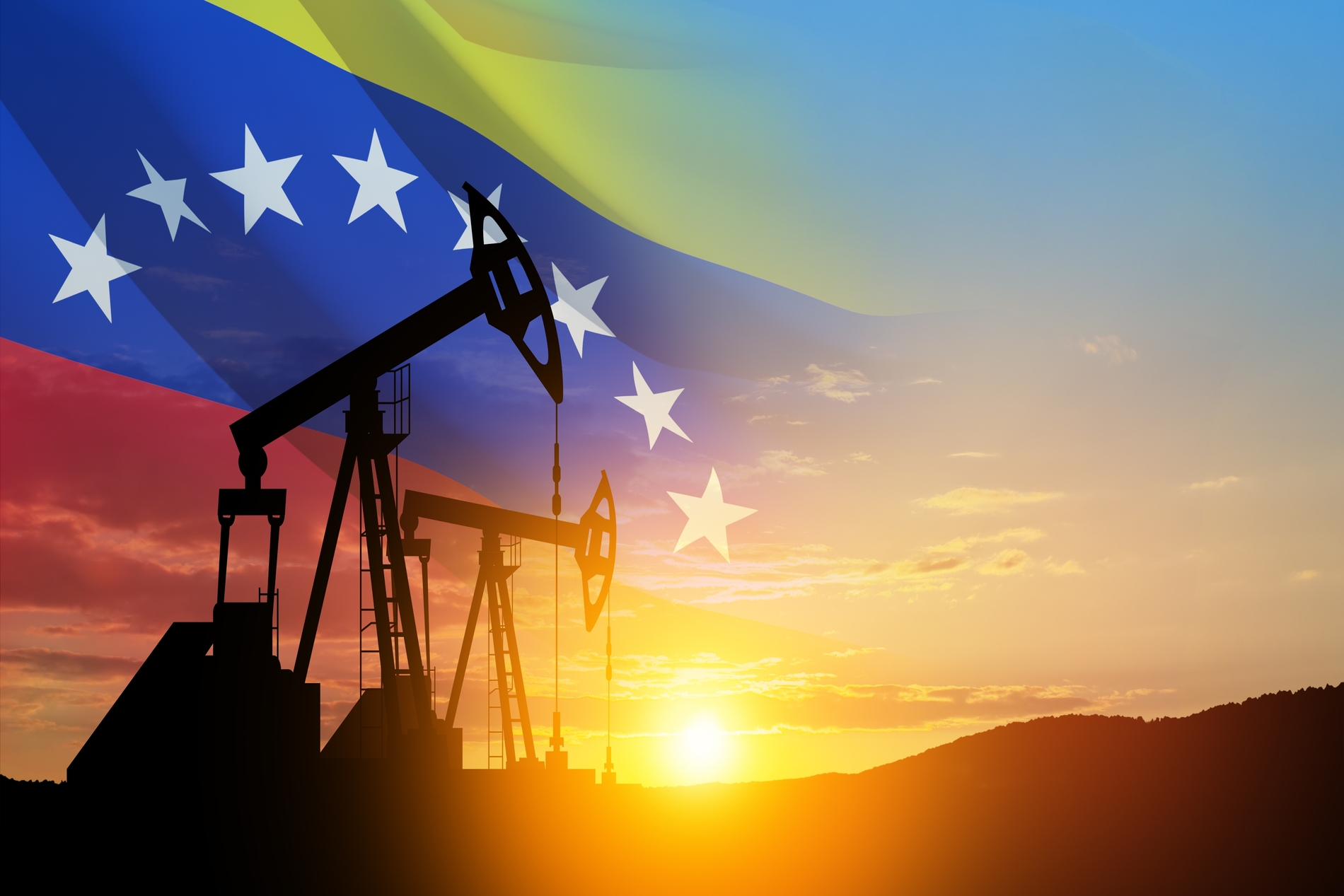
The United States and Venezuela have entered a sweeping energy agreement that could reshape the relationship between the two countries and significantly expand American access to Venezuelan crude.
Announced by President Donald Trump on August 28 and detailed further in the following days, the agreement covers 17 Venezuelan oil fields containing roughly 65 billion barrels of proven reserves. The arrangement is expected to attract up to $100 billion in private investment while giving the U.S. government significant economic and operational influence over future production.
A Huge Share of Venezuelan Oil
Venezuela holds the world’s largest proven crude oil reserves, with more than 300 billion barrels estimated to be underground.
The new agreement does not cover all of those reserves. Instead, it focuses on 17 fields located mainly around the Orinoco Oil Belt and Lake Maracaibo.
Together, they contain around 65 billion barrels of proven oil reserves, an enormous amount when compared with roughly 46 billion barrels of proven reserves within the United States itself.
The concessions granted for these fields are designed to last for 100 years.
How Much Control Does the U.S. Actually Have?
The structure is slightly more complicated than simply saying the United States now owns Venezuelan oil.
North American Blue Energy Partners, or NABEP, has received concessions to operate the 17 fields. Under the agreement, the U.S. Department of War’s Office of Strategic Capital receives a 35% equity stake in NABEP’s corporate parent.
The State Department also receives the right to purchase 20% of production at cost, along with first refusal on the remaining production.
Together, those provisions have been described as giving the U.S. control over roughly 55% of the venture’s effective output.
That crude could help supply American refineries and replenish the U.S. Strategic Petroleum Reserve.
Nearly $100 Billion Could Be Invested
The agreement is not simply about gaining access to oil already flowing from the ground.
Much of Venezuela’s oil infrastructure needs serious investment.
Years of underinvestment, sanctions, political instability, and aging equipment have left the country producing far below its potential. Despite its enormous reserves, Venezuela has recently been producing only around 1.2 million barrels per day.
NABEP plans to invest as much as $100 billion in new infrastructure and expanded production.
That money could go toward repairing existing facilities, developing new fields, upgrading pipelines, and improving the equipment needed to process Venezuela’s particularly heavy crude.
Venezuela Sees a Major Revenue Opportunity
For Venezuela, the attraction is obvious.
Interim President Delcy Rodríguez has said the agreement could generate approximately $209 billion in taxes and other government revenue over the long term.
Venezuelan officials have also argued that the investment could create jobs, rebuild the country’s energy industry, and provide funding for wider economic development.
Rodríguez has stressed that Venezuela continues to own its natural resources despite the expanded American role in developing and purchasing the oil.
Don’t Expect Cheaper Fuel Immediately
The size of the agreement makes it tempting to assume that huge amounts of additional oil will quickly reach the market.
That is unlikely.
Venezuelan crude is difficult and expensive to develop, particularly in areas that need extensive infrastructure work. Bringing major new fields into production can take years.
There are also legal questions surrounding the agreement.
Energy experts and Venezuelan lawyers have questioned whether all elements of the arrangement fit comfortably within the country’s constitution and hydrocarbons laws. Some have also called for greater transparency around the contracts and ownership structure.
Those uncertainties could affect how quickly private investors are willing to commit billions of dollars.
Why the Deal Matters for the U.S.
For Washington, the agreement is about more than gasoline prices.
Access to a large source of heavy crude in the Western Hemisphere could strengthen long-term energy security and provide American refineries with a more reliable regional supply.
It could also help rebuild the Strategic Petroleum Reserve while reducing exposure to disruptions affecting oil shipments from other parts of the world.
The administration has presented the agreement as a major step toward stronger American energy independence.
A Deal With Enormous Potential and Big Questions
On paper, the numbers are extraordinary: 65 billion barrels of proven reserves, up to $100 billion in investment, and more than $200 billion in projected Venezuelan government revenue.
Turning those numbers into reality will be much harder.
Infrastructure needs rebuilding, investors need confidence, legal questions need answers, and production needs to increase significantly before global oil markets feel the full effect.
The agreement may eventually become one of the most consequential energy partnerships in the Western Hemisphere. For now, it represents an enormous opportunity accompanied by equally significant economic, legal, and political challenges.

-
 Federal authorities have launched investigations into a series of cyber intrusions targeting municipal water treatment facilities across several U.S....
 -
The United States has announced plans to introduce a 50% tariff on approximately $20 billion worth of Canadian imports,...
-
Recent court documents released on July 20 show that federal investigators sought phone records belonging to several New York...
-
Washington entered a period of transition following the death of Republican Senator Lindsey Graham on Saturday, July 11. Graham,...
-
Following a tense weekend in the Strait of Hormuz, the U.S. carried out a significant wave of airstrikes targeting...
-
Things in the Middle East have taken another sharp turn. A recently mediated ceasefire between the U.S. and Iran...
-
In a surprising move that has captured attention across the tech world, the U.S. government has ordered Anthropic to...
-
Election season always brings strong opinions, and this year’s California primary elections were no exception. Following several closely watched...
-
On Tuesday, the White House introduced a major update to cybersecurity regulations targeting the protection of advanced artificial intelligence...
-
A United Airlines flight faced a tense situation on Saturday evening when a passenger tried to get into the...
-
A high-intensity security incident unfolded in Washington, D.C., on Saturday evening, drawing immediate attention and a swift law enforcement...
-
A routine military demonstration at Mountain Home Air Force Base in western Idaho took a dramatic turn over the...