
Attorney General calls it a “forced military occupation”
Washington, D.C. has filed a lawsuit against the Trump administration over the deployment of thousands of National Guard troops in the city. The case, led by Attorney General Brian Schwalb, argues that the presence of troops amounts to a forced military occupation that violates both constitutional norms and the city’s limited right to self-govern.
Why D.C. is suing
The lawsuit claims that the administration’s decision to send troops without approval from local officials undermines the city’s Home Rule Act. Schwalb argued that armed forces should not be used for civilian policing, especially when many of the deployed troops come from out of state and are not accountable to D.C. residents. He described the situation as an overreach of federal authority that directly impacts the freedoms of the people living in the capital.
The administration’s defense
The White House maintains that the deployment is lawful and justified. Officials say the National Guard has been stationed in the city to protect federal property and to support police during periods of unrest. A spokesperson defended the move, insisting that the president has the authority to act in Washington, D.C., when national security or federal assets are at risk.
Scope of the deployment
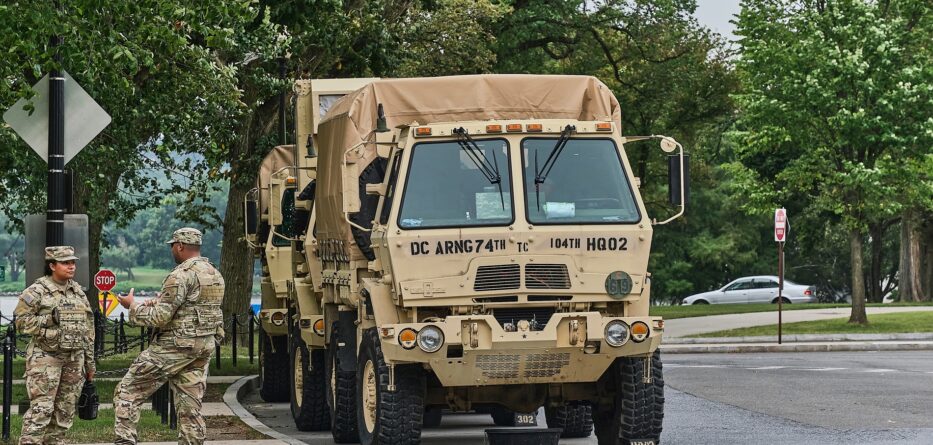
As of early September, nearly 2,300 National Guard members are operating in D.C. More than 1,300 of them have been brought in from other states. They have been stationed at prominent locations such as the National Mall and Metro stations. Reports note that troops have been assisting in a variety of public safety incidents, from medical emergencies to monitoring suspicious activity.
Broader implications
The lawsuit marks the most direct legal challenge yet to the federal government’s expanded use of military forces in the nation’s capital. It comes after similar deployments in other states have already been struck down by the courts. If the case succeeds, it could set important limits on federal authority and reshape the balance of power between Washington and local governance.
Bottom line
D.C.’s legal action is more than a fight over troop presence. It is a battle over autonomy, constitutional limits, and the role of the military in civilian life. The outcome of this case could have lasting consequences for how the federal government uses military power in American cities.

-
 The United States has temporarily stepped back from imposing new 50% tariffs on around $20 billion worth of Canadian...
 -
The Boeing 737 MAX is facing another round of regulatory attention in the United States. The Federal Aviation Administration...
-
Federal authorities have launched investigations into a series of cyber intrusions targeting municipal water treatment facilities across several U.S....
-
The United States has announced plans to introduce a 50% tariff on approximately $20 billion worth of Canadian imports,...
-
Recent court documents released on July 20 show that federal investigators sought phone records belonging to several New York...
-
Washington entered a period of transition following the death of Republican Senator Lindsey Graham on Saturday, July 11. Graham,...
-
Following a tense weekend in the Strait of Hormuz, the U.S. carried out a significant wave of airstrikes targeting...
-
Things in the Middle East have taken another sharp turn. A recently mediated ceasefire between the U.S. and Iran...
-
How Many Policies Actually HELPED Americans? A year into his second term, President Trump made a lot of promises...
-
In a surprising move that has captured attention across the tech world, the U.S. government has ordered Anthropic to...
-
Election season always brings strong opinions, and this year’s California primary elections were no exception. Following several closely watched...
-
On Tuesday, the White House introduced a major update to cybersecurity regulations targeting the protection of advanced artificial intelligence...