
Credit: Shutterstock
China achieved a significant milestone in its space program on November 25, 2026, when Pakistani astronaut Muhammad Zeeshan Ali became the first foreign national to enter the Tiangong space station. Arriving aboard the Shenzhou-24 spacecraft, Ali also made history as the first Pakistani astronaut to reach Earth’s orbit.
The achievement was celebrated across Pakistan, while Beijing described the mission as an important step toward opening its space program to international partners. It represents a significant development in scientific cooperation between the two countries.
A Historic Journey Into Space
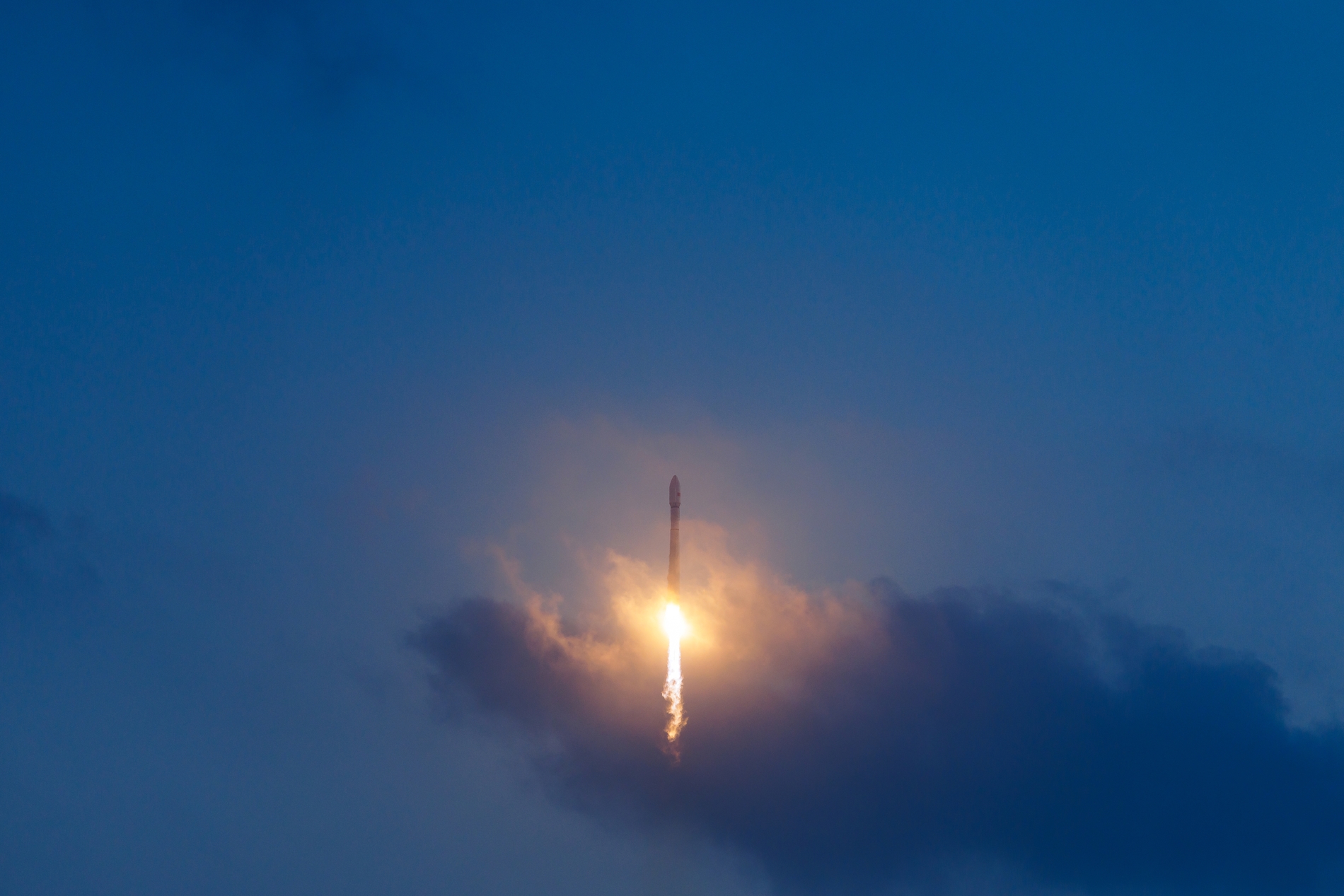
The Shenzhou-24 spacecraft launched from the Jiuquan Satellite Launch Centre aboard a Long March 2F rocket. Ali was accompanied by Chinese astronauts Tang Hongbo and Wu Yi, who will remain aboard the station for approximately six months.
Following the successful docking, the astronauts entered Tiangong and received a warm welcome from the outgoing crew. Images of Ali greeting his Chinese colleagues captured a historic moment for both nations, symbolizing their growing partnership in space exploration.
Meet Pakistan’s First Astronaut
Muhammad Zeeshan Ali, a 40-year-old Pakistani military pilot, serves as a payload specialist on the Shenzhou-24 mission. Before his historic flight, he underwent seven months of intensive preparation in Beijing, including Chinese-language training.
His participation follows a space cooperation agreement signed between China and Pakistan in February 2025. For Pakistan, his journey represents years of scientific ambition and provides a powerful source of inspiration for young people interested in aerospace engineering and technology.
Scientific Research Beyond Earth
Ali is expected to spend approximately one week aboard Tiangong, participating in collaborative scientific research. His responsibilities include experiments exploring biotechnology, agricultural development, and advanced materials.
Among the planned research projects are studies involving microalgae as a potential source of food and oxygen during future space missions. Researchers will also examine how quinoa seeds respond to the conditions of spaceflight. Such experiments could contribute to the development of sustainable systems for long-duration space exploration.
Strengthening China-Pakistan Space Cooperation
China and Pakistan have maintained space-related cooperation for decades, particularly in satellite development and launch services. However, sending a Pakistani astronaut into orbit represents a significant expansion of that relationship.
The mission creates opportunities for knowledge exchange, advanced technical training, and future scientific partnerships. Both governments have welcomed the achievement as a milestone in their bilateral relationship and a foundation for further collaboration in space technology.
China’s Growing International Space Ambitions
Completed in 2022, Tiangong has become a central component of China’s ambitious space program. Welcoming its first international astronaut demonstrates Beijing’s willingness to extend participation beyond its domestic missions.
With the International Space Station expected to retire around 2030, Tiangong could become an increasingly important platform for international scientific research. China’s engagement with foreign astronauts may also encourage other nations to explore similar partnerships.
A New Frontier for Pakistan
Ali’s historic journey represents more than a personal accomplishment. It places Pakistan within a small but growing community of nations whose citizens have traveled into orbit, opening new possibilities for scientific research, technological development, and aerospace education.
As Pakistan celebrates this achievement, the mission serves as a reminder of what international cooperation can accomplish. For future generations of Pakistani scientists and engineers, Ali’s journey could become the inspiration behind even greater ambitions in space exploration.


-
 A wave of protests has spread across Europe as citizens demand action on rising living costs, housing shortages, and...
-
Brazil has entered a period of political tension following its presidential runoff on October 25, 2026, after incumbent President...
-
Russia has intensified its aerial campaign against Ukraine, launching hundreds of drones and missiles as Ukrainian forces struggle with...
-
South African jurist and former United Nations human rights chief Navi Pillay has been awarded the 2026 Nobel Peace Prize...
-
A Flydubai passenger flight traveling from Dubai to Tel Aviv was forced to make an emergency landing in Saudi...
-
The 81st United Nations General Assembly brought another intense week of international diplomacy to New York, with world leaders...
-
Voters in the southern Philippines have taken part in a historic election that could shape the future of one...
-
The 18th BRICS Summit concluded in New Delhi on September 13 after two days of discussions involving some of...
-
The scale of the disaster unfolding across the Himalayas has become clearer, and the numbers are devastating. By September...
-
Severe weather has caused serious disruption across parts of Western Europe and Asia, with communities in Germany and China...
-
Singapore’s death penalty policies are once again under international attention. On August 18, independent United Nations human rights experts...
-
A powerful 7.4-magnitude earthquake struck western Colombia on August 10, shaking cities across the country and sending tremors into...