Credit: Shutterstock
The United States is entering the final days of its 2026 midterm election campaign, with political advertising reaching unprecedented levels and both major parties intensifying efforts to mobilize voters.
As the November 3 elections approach, President Donald Trump and other prominent political figures have been traveling across the country to support congressional candidates.
Campaign spending has surpassed previous records, while recent polling suggests that economic concerns and dissatisfaction with government policies are influencing voter sentiment.
Political Advertising Breaks Spending Records
The 2026 midterm elections have become the most expensive congressional election cycle in American history.
According to political advertising research firm AdImpact, spending and advertising reservations for the 2025–2026 election cycle reached approximately $11.21 billion by October 27.
The figure surpassed advertising totals from the 2024 presidential election cycle.
Republican campaigns and supporting organizations accounted for approximately $5.18 billion, while Democratic campaigns and affiliated groups spent around $4.77 billion.
The enormous financial investment reflects the importance both parties place on controlling Congress.
Trump Intensifies His Final Campaign Push
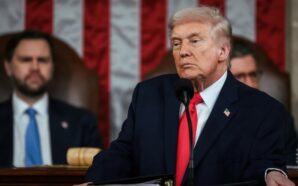
President Trump has increased his public appearances as Republicans work to defend their congressional majorities.
Between October 23 and 26, the administration’s campaign efforts focused on competitive Senate races and traditionally Republican states facing stronger-than-expected opposition.
Trump had campaigned in states including Texas and Alaska earlier in October, while his October 26 appearance in Mississippi highlighted the party’s concerns about maintaining support in traditionally conservative territory.
During his rallies, Trump emphasized economic performance, Republican policy priorities, and the importance of voter turnout. Other prominent Republican figures, including Vice President JD Vance, have also participated in campaign events across the country.
Democrats Focus on Economic Concerns
Democratic candidates have concentrated much of their campaign messaging on household expenses, healthcare, and dissatisfaction with the administration’s policies. Rising living costs remain a major concern for American voters.
Candidates have used campaign appearances and advertising to highlight issues such as grocery prices, housing affordability, and the economic consequences of international conflicts.
Former President Barack Obama and other leading Democrats have joined campaign events to encourage participation. Their appearances reflect the party’s efforts to attract independent voters while maintaining enthusiasm among its traditional supporters.
Polling Reveals Changing Voter Sentiment
Recent national polling indicates that Democrats have gained an advantage in the generic congressional ballot, which measures voters’ preferences between the two major parties.
RealClearPolling average showed Democrats receiving approximately 51.4% support compared with 43.2% for Republicans. However, national polling does not necessarily reflect the outcome of individual congressional races.
Senate contests in Texas, Alaska, Ohio, Georgia, and several other states remain competitive. Local candidates, turnout patterns, and state-specific political concerns can produce results that differ significantly from national trends.
Texas and Alaska Attract National Attention
Texas has emerged as one of the most closely watched Senate contests.
Democrat James Talarico is challenging Republican Ken Paxton in a race that has attracted substantial advertising investment.
Political groups have spent hundreds of millions of dollars attempting to influence the contest, making it one of the country’s most expensive Senate races.
Alaska has also become increasingly competitive.
Republican Senator Dan Sullivan faces a challenge from former Democratic Representative Mary Peltola.
The state’s ranked-choice voting system adds another element to the contest, allowing voters to rank candidates rather than select only one.
Both races demonstrate why national political leaders are dedicating considerable attention to states that have historically favored Republicans.
Campaign Finance System Faces Cybersecurity Disruption
The final campaign period has also been complicated by a cybersecurity incident involving the Federal Election Commission.
On October 26, the agency temporarily suspended public-facing electronic services following an attempted breach.
The disruption affected systems used to submit campaign finance disclosures, including reports detailing last-minute political spending.
The incident raised concerns about transparency during a period of unusually high campaign expenditure.
However, the Federal Election Commission does not administer elections or maintain voter registration databases, meaning the disruption did not directly affect ballot casting or vote counting.
What the Final Days Could Mean
With Election Day approaching, both parties are concentrating on voter turnout, campaign messaging, and competitive congressional districts.
Republicans are seeking to maintain control of Congress, while Democrats are attempting to gain enough seats to change the balance of power in Washington.
Despite record spending, the relationship between advertising investment and electoral success remains uncertain.
Polling provides a snapshot of voter preferences, but turnout and late campaign developments can influence individual contests.
As Americans prepare to vote on November 3, the 2026 midterms are becoming a major test of political messaging, campaign financing, and public confidence in the country’s leadership.

-
 With less than two weeks remaining before the November 3, 2026, midterm elections, political campaigns across the United States...
-
The 2026 Nobel Prize announcements celebrated remarkable achievements in science and literature, recognizing researchers who helped solve a longstanding...
-
The U.S. Treasury Department launched a major financial enforcement action on October 1 targeting the A7 Network, a Russia-linked...
-
U.S. President Donald Trump hosted Chinese President Xi Jinping in Washington from September 23 to 25 for a three-day...
-
Wildland firefighters across the United States are facing another demanding fire season, with federal agencies operating at Preparedness Level...
-
A quarter of a century has now passed since September 11, 2001. On September 11, 2026, Americans marked the...
-
The H-1B visa program is back at the center of the U.S. immigration and employment debate. A presidential proclamation...
-
The United States and Venezuela have entered a sweeping energy agreement that could reshape the relationship between the two...
-
The United States has temporarily stepped back from imposing new 50% tariffs on around $20 billion worth of Canadian...
-
The Boeing 737 MAX is facing another round of regulatory attention in the United States. The Federal Aviation Administration...
-
Federal authorities have launched investigations into a series of cyber intrusions targeting municipal water treatment facilities across several U.S....
-
The United States has announced plans to introduce a 50% tariff on approximately $20 billion worth of Canadian imports,...