Credit: Shutterstocl
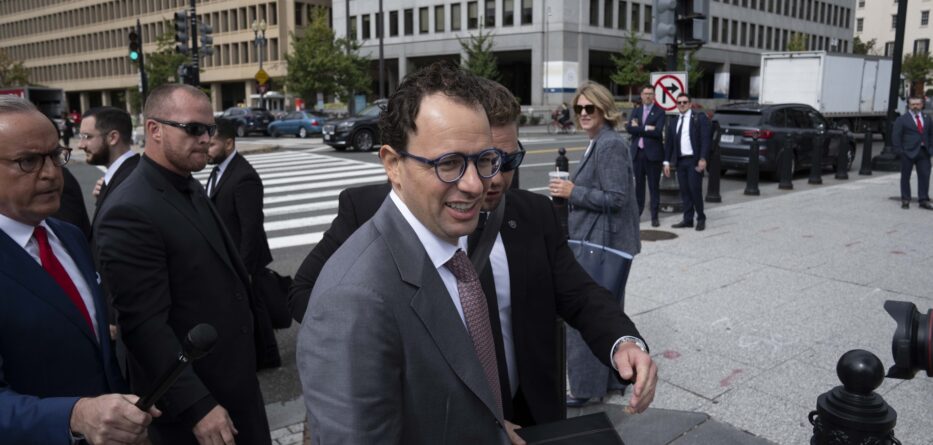
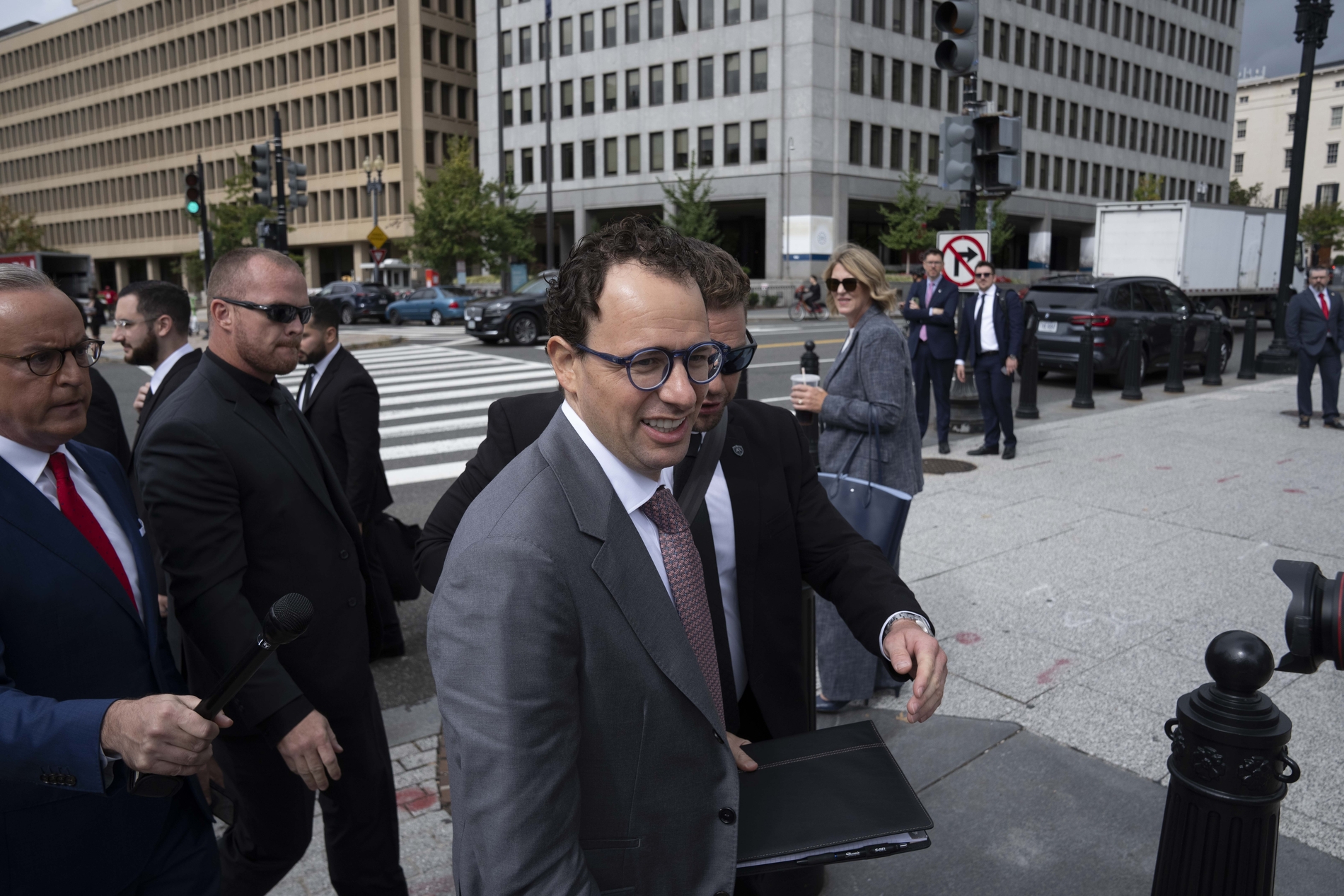
President Donald Trump and executives from some of America’s largest technology companies signed a voluntary AI safety agreement at the White House on September 29, creating a new framework for how companies developing powerful frontier models should monitor their systems.
The White House Accord on Super Intelligence brings together Google, Meta, OpenAI, Nvidia, Anthropic and xAI. Trump described the agreement as “morally binding,” although it doesn’t create legally enforceable requirements for the participating companies.
Companies Agree to Police Their Systems
The central idea behind the accord is industry self-regulation.
Companies training and deploying frontier models are expected to establish strong internal processes for identifying potentially dangerous behavior and correcting problems when they appear.
The agreement specifically highlights risks involving cybersecurity, biological and chemical threats, and AI systems accessing technical infrastructure in unintended ways.
Four Layers of Safety Controls
Rather than prescribing one technical solution, the accord outlines four layers of oversight.
Companies should first maintain internal controls capable of monitoring their models during training and deployment. A separate internal team should then verify that those controls are operating correctly and ensure identified problems are addressed.
Participating companies should also work with independent external auditors or evaluators. Finally, an independent committee of each company’s board should receive reports from internal teams and outside evaluators and oversee corrective action.
The Agreement Isn’t Legally Binding
One of the most important details is what the accord doesn’t do.
It doesn’t establish government penalties for companies that fail to follow its principles, and it doesn’t require participating companies to publicly release their audit findings.
The agreement instead relies heavily on companies maintaining their commitments voluntarily.
However, the document leaves open the possibility that some of its principles could eventually be written into laws or formal regulations.
AI Becomes “Super Intelligence”
The agreement arrived alongside another unusual policy change.
Trump signed an executive order directing executive branch agencies to use the terms “Super Intelligence” and “SI” instead of “Artificial Intelligence” and “AI” in official non-statutory communications and policy documents.
For now, the government’s definition of Super Intelligence covers technologies already included under the federal definition of artificial intelligence. The administration has also ordered work on a future federal definition.
Industry Leaders Back the Framework
The White House meeting brought together several of the most recognizable figures in technology, including Anthropic CEO Dario Amodei, Nvidia CEO Jensen Huang, Meta CEO Mark Zuckerberg and Google CEO Sundar Pichai, alongside representatives from OpenAI and xAI.
Zuckerberg said the framework included multiple layers of auditing and controls, while Trump emphasized the role companies themselves would play in monitoring the industry.
Questions About Enforcement Remain
The accord represents a notable attempt to establish shared safety expectations among competing AI companies, but questions remain about how effective voluntary oversight can be.
Independent evaluators are included in the framework, yet companies retain substantial control over implementation, and there is currently no federal enforcement mechanism attached to the agreement.
That makes September 29 an important step in America’s evolving approach to frontier AI safety, but not necessarily the final one. The accord itself acknowledges that its principles could eventually become part of formal regulation as increasingly powerful systems continue to develop.

-
 For over a decade, Apple resisted putting a touchscreen on the Mac. That changed on October 28, 2026,...
-
Researchers at the Massachusetts Institute of Technology (MIT) have developed a new artificial intelligence model capable of understanding the...
-
Microsoft has unveiled its next-generation artificial intelligence processor, the Maia 300, marking another major step toward building its own...
-
South Korea is seeking a stronger position in the global artificial intelligence industry through a proposed $3.5 billion state-backed...
-
Apple has only recently introduced its latest iPhone generation, but attention is already shifting toward what could be a...
-
The debate around artificial intelligence is shifting. The question is no longer simply how powerful AI can become, but...
-
Artificial intelligence isn’t only living in enormous cloud data centers anymore. At IFA 2026 in Berlin, Anker introduced MindBase,...
-
September has started with some major developments across the technology world. Google received an important outcome in its long-running...
-
Two very different technology updates are showing where the industry is heading next. Samsung is preparing to expand...
-
The AI race has reached another major milestone. Google’s Gemini app has passed 1 billion monthly active users, making...
-
Nothing appears ready to take a much bigger step in the smartphone market. The company is reportedly considering launching...
-
Apple has introduced a new hardware leasing initiative in the United States, expanding its approach to how customers purchase...