Credit: Shutterstock
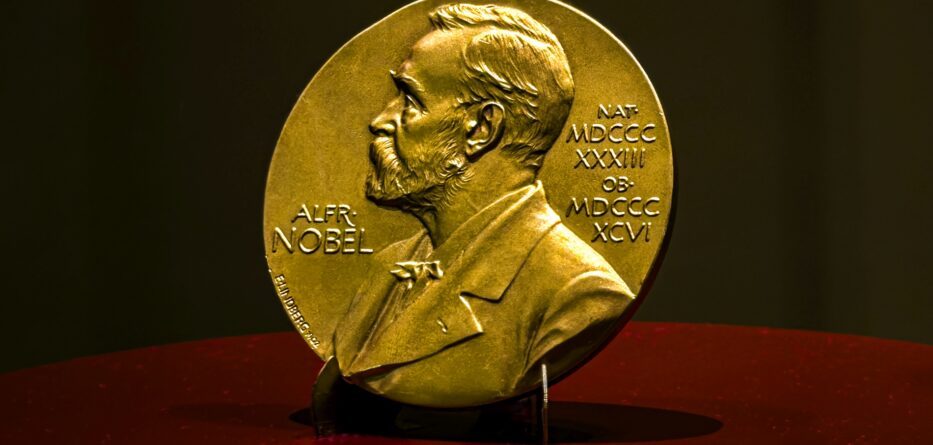
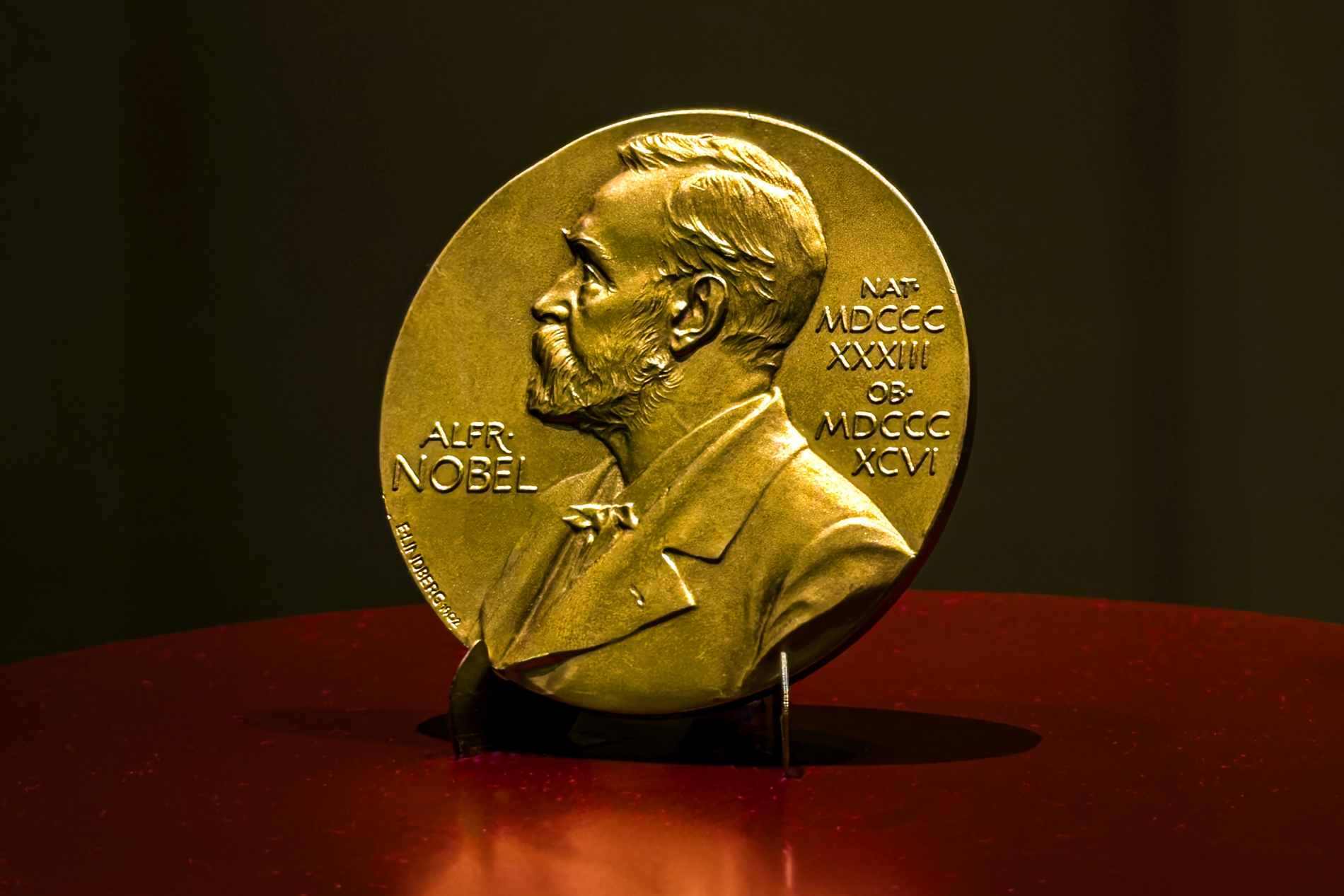
The 2026 Nobel Prize announcements celebrated remarkable achievements in science and literature, recognizing researchers who helped solve a longstanding chemical mystery and a Canadian writer whose unconventional work has transformed contemporary storytelling.
On October 7, French chemist Henri B. Kagan and Japanese scientist Kenso Soai were awarded the Nobel Prize in Chemistry. A day later, the Swedish Academy announced Canadian poet, essayist, and translator Anne Carson as the winner of the Nobel Prize in Literature.
Chemistry Prize Recognizes a Major Discovery
Henri B. Kagan, 95, and Kenso Soai, 76, received the Chemistry Nobel for their discoveries involving nonlinear effects and autocatalysis in asymmetric organic synthesis.
Their research helped explain how chemical reactions can favor one version of a molecule over its mirror image.
This question has fascinated scientists for more than a century because many molecules exist in two forms that resemble left and right hands.
Although the structures appear almost identical, their behavior can differ significantly.
Why Mirror-Image Molecules Matter
The discovery has important implications for pharmaceutical development.
In some medicines, different mirror-image forms of the same molecule can produce different biological effects. One version may deliver the intended treatment, while another may behave differently.
Kagan and Soai’s research provided important tools for understanding and controlling these chemical reactions.
Their contributions have helped chemists develop more precise approaches to producing complex molecules, particularly in pharmaceutical manufacturing.
Two Scientists Share the Recognition
Kagan’s work on asymmetric catalysis helped establish methods for selectively producing particular molecular forms.
Soai became known for demonstrating asymmetric autocatalysis, a process in which a reaction product helps accelerate the production of more molecules with the same handedness.
Together, their findings advanced scientific understanding of how molecular asymmetry can develop and become amplified.
The two researchers will share the prize of 12 million Swedish kronor.
Anne Carson Wins the Literature Nobel
On October 8, the Swedish Academy awarded the Nobel Prize in Literature to Canadian author Anne Carson.
The 76-year-old writer is celebrated for combining poetry, prose, literary criticism, translation, and classical mythology in unconventional ways.
Rather than following traditional literary structures, Carson frequently experiments with form, allowing ancient stories to take on new meanings for modern readers.
Her work has earned international recognition for its originality and intellectual depth.
Bringing Ancient Stories Into Modern Life
Carson’s writing draws heavily on ancient Greek literature, mythology, and philosophy.
Her acclaimed 1998 book Autobiography of Red reimagines a figure from Greek mythology as a contemporary teenager navigating love, identity, and heartbreak.
Other notable works include Eros the Bittersweet, The Beauty of the Husband, and Nox.
Through these books, Carson has developed a distinctive literary voice that moves freely between genres while exploring deeply human experiences.
A Surprising Moment for the Winner
Carson was reportedly in Iceland when she received the news of her Nobel Prize.
According to the Swedish Academy, the author was surprised by the announcement.
Her selection also marks another important moment for Canadian literature, bringing international attention to a writer whose experimental approach has influenced readers, poets, and scholars for decades.
Celebrating Different Forms of Discovery
The Chemistry and Literature prizes recognize achievements in very different fields, but both celebrate people who have challenged established ways of thinking.
Kagan and Soai helped scientists better understand how molecules behave, while Carson expanded the possibilities of literary expression.
The 2026 Nobel announcements demonstrate how discovery can take many forms, from understanding the smallest structures of matter to finding entirely new ways of telling human stories.

-
 A federal appeals court has rejected an emergency request from the U.S. Department of Justice (DOJ) to prevent California...
-
The United States is entering the final days of its 2026 midterm election campaign, with political advertising reaching unprecedented...
-
With less than two weeks remaining before the November 3, 2026, midterm elections, political campaigns across the United States...
-
The U.S. Treasury Department launched a major financial enforcement action on October 1 targeting the A7 Network, a Russia-linked...
-
U.S. President Donald Trump hosted Chinese President Xi Jinping in Washington from September 23 to 25 for a three-day...
-
Wildland firefighters across the United States are facing another demanding fire season, with federal agencies operating at Preparedness Level...
-
A quarter of a century has now passed since September 11, 2001. On September 11, 2026, Americans marked the...
-
The H-1B visa program is back at the center of the U.S. immigration and employment debate. A presidential proclamation...
-
The United States and Venezuela have entered a sweeping energy agreement that could reshape the relationship between the two...
-
The United States has temporarily stepped back from imposing new 50% tariffs on around $20 billion worth of Canadian...
-
The Boeing 737 MAX is facing another round of regulatory attention in the United States. The Federal Aviation Administration...
-
Federal authorities have launched investigations into a series of cyber intrusions targeting municipal water treatment facilities across several U.S....