

Credit: Unsplash
Climate Shocks and Insurance: The Financial Toll on America’s Homes
The climate crisis is no longer just an environmental concern; it is rapidly turning into a financial crisis. State Farm, California’s largest homeowner insurance company, recently announced that it would no longer offer coverage to homeowners across the state, not just in wildfire-prone areas. This decision reflects a broader trend among insurance companies that either raise rates, limit coverage, or completely withdraw from high-risk areas. The consequences are clear – it is becoming increasingly expensive for people to protect their homes.
The former head of insurance at the Federal Emergency Management Agency, Roy Wright, aptly stated, “Risk has a price.” Insurance companies are finally reckoning with the true cost of climate-related disasters. In parts of Kentucky devastated by storms, flood insurance rates are set to quadruple. Louisiana’s insurance market is in crisis, prompting officials to offer substantial subsidies to attract insurers. Even in Florida, where hurricanes are a constant threat, homeowners are struggling to find affordable storm coverage as major insurers exit the market.
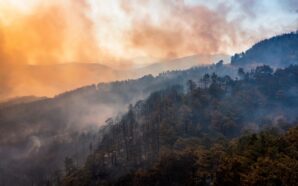
State Farm’s decision to halt new insurance policies in California is driven by the “rapidly growing catastrophe exposure” the state faces. While the company acknowledges California’s efforts to reduce wildfire losses, it prioritizes its financial stability. The rise in insurance rates in California can be traced back to the unprecedented severity of wildfires, worsened by the effects of climate change. Some homeowners have lost their insurance, as companies refuse to cover properties in vulnerable areas.
State Farm has announced that it will not be selling any new home insurance policies in California. pic.twitter.com/6FNyWYmJpW
— TODAY (@TODAYshow) May 27, 2023
The California Department of Insurance recognizes the underlying factors contributing to the insurance industry’s disruption, with climate change being the most significant. Efforts like the Safer From Wildfires initiative and legislation are underway to regulate development in high-risk areas. However, according to Tom Corringham, a research economist at the Scripps Institution of Oceanography, it is unsustainable to allow people to live in homes that are becoming uninsurable or prohibitively expensive to insure. Policymakers must consider proactive measures, such as purchasing high-risk properties or relocating residents from vulnerable communities.
The growing trend of insurance companies reducing coverage or pulling out of high-risk areas underscores the urgent need for comprehensive climate action. Mitigating the financial impact of climate change requires addressing its root causes and implementing resilient strategies. While State Farm’s decision in California may be seen as a necessary business move, it serves as a wake-up call for society to prioritize climate resilience and consider the long-term implications of inhabiting areas increasingly susceptible to climate shocks.


-
 On Tuesday, the White House introduced a major update to cybersecurity regulations targeting the protection of advanced artificial intelligence...
 -
A United Airlines flight faced a tense situation on Saturday evening when a passenger tried to get into the...
-
A high-intensity security incident unfolded in Washington, D.C., on Saturday evening, drawing immediate attention and a swift law enforcement...
-
A routine military demonstration at Mountain Home Air Force Base in western Idaho took a dramatic turn over the...
-
A rare hantavirus outbreak linked to the M/V Hondius cruise ship has moved from a medical emergency at sea...
-
On April 1, the U.S. Supreme Court began hearing arguments in one of the year’s most high-stakes legal battles:...
-
A highly anticipated diplomatic summit between the United States and Iran in Islamabad collapsed before formal talks could even...
-
Todd Lyons, the acting director of U.S. Immigration and Customs Enforcement (ICE), announced that he will step down at...
-
On Sunday night, April 13, President Donald Trump ignited a major online controversy after posting an AI-generated image on...
-
The Springs Fire near Moreno Valley, California, which began on April 4, was brought under control quickly thanks to...
-
Over the weekend of March 28–29, large-scale “No Kings” protests took place across the United States, drawing millions of...
-
A powerful storm system swept across the Eastern United States beginning March 15 and continuing into March 16, bringing...