
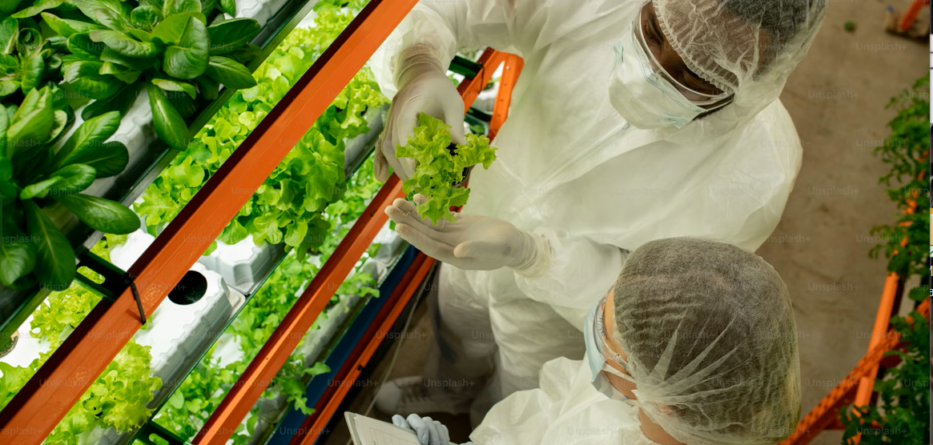


In partnership with the Canadian Space Agency, NASA introduced the Deep Space Food Challenge, a novel program accepting global submissions. The contest is now in its final and second phase. Phase two opened in January 2022 and is comprised of 11 finalists. Finalists will present their work at the NYCxDESIGN Festival in New York. On Friday, May 19th, the phase two winning teams will be announced at the event, which can be viewed via an online Zoom starting at 12 PM EDT.
What healthy and sustainable ways would you use to keep astronauts fed on long-duration missions to the Moon, Mars, and beyond?
The Phase 2 winners of our Deep Space Food Challenge will be revealed live Friday, May 19, at the #NYCxDESIGN Festival: https://t.co/cp6nP8iWn3 pic.twitter.com/IdjfMiaAWZ
— NASA (@NASA) May 18, 2023
The Deep Space Food Challenge participants strive to offer solutions for future space missions by introducing imaginative, new techniques and strategies for food supplies and nutritious and sustainable solutions for future space travelers on long-term trips. The purpose of these new processes would be to create new technologies or methods for food production that require negligible resources and deliver minor waste.
Some of the solutions in play include systems that produce food utilizing compounds like fungal proteins and carbon dioxide. In addition, a closed-looped system was conceived to grow and maintain vegetables and greens in a space mission environment. A panel of adept judges with specializations in various academic, government, and industry areas will assess the teams’ proposals. The measures they will consider include innovation in design, scientific and technical approaches as well as the practicality and viability of their design.
The Deep Space Food Challenge is all about feeding the interplanetary humans of tomorrow! Here's a refresher on the importance of food technology before our winner’s announcement tomorrow! pic.twitter.com/TfC4o9csFV
— Centennial Challenge (@NASAPrize) May 18, 2023
Phase two finalists will be visited in their facilities by judges. Finalists will present a demonstration to display their technology as well as the simplicity and ease of the process for their food production. Potentially up to five of the highest-scoring U.S. teams will be acknowledged as winners of the phase two challenge. Each winner would be awarded $150,000. In addition, up to three highest-scoring global teams will be identified as winners of the phase two challenge.
-
The 2026 NATO Summit officially began in Ankara, Turkey, drawing attention from world leaders, defense analysts, and media alike....
-
Following a tense weekend in the Strait of Hormuz, the U.S. carried out a significant wave of airstrikes targeting...
-
Europe is dealing with one of its harshest early-summer heat waves in years. What started as an intense spell...
-
Things in the Middle East have taken another sharp turn. A recently mediated ceasefire between the U.S. and Iran...
-
In a dramatic turn of events off the coast of Oman on June 14, an Indian-flagged dhow sank in...
-
In a surprising move that has captured attention across the tech world, the U.S. government has ordered Anthropic to...
-
South Korea has taken a major step toward digital modernization with President Lee Jae-myung nominating Han Seong-sook as the...
-
Election season always brings strong opinions, and this year’s California primary elections were no exception. Following several closely watched...
-
Saudi Arabia’s economy has spent the past few years building a reputation for strength, reform, and steady growth. The...
-
On Tuesday, the White House introduced a major update to cybersecurity regulations targeting the protection of advanced artificial intelligence...
-
A United Airlines flight faced a tense situation on Saturday evening when a passenger tried to get into the...
-
Each year, millions of Muslims from around the world travel to Saudi Arabia to participate in the Hajj pilgrimage,...