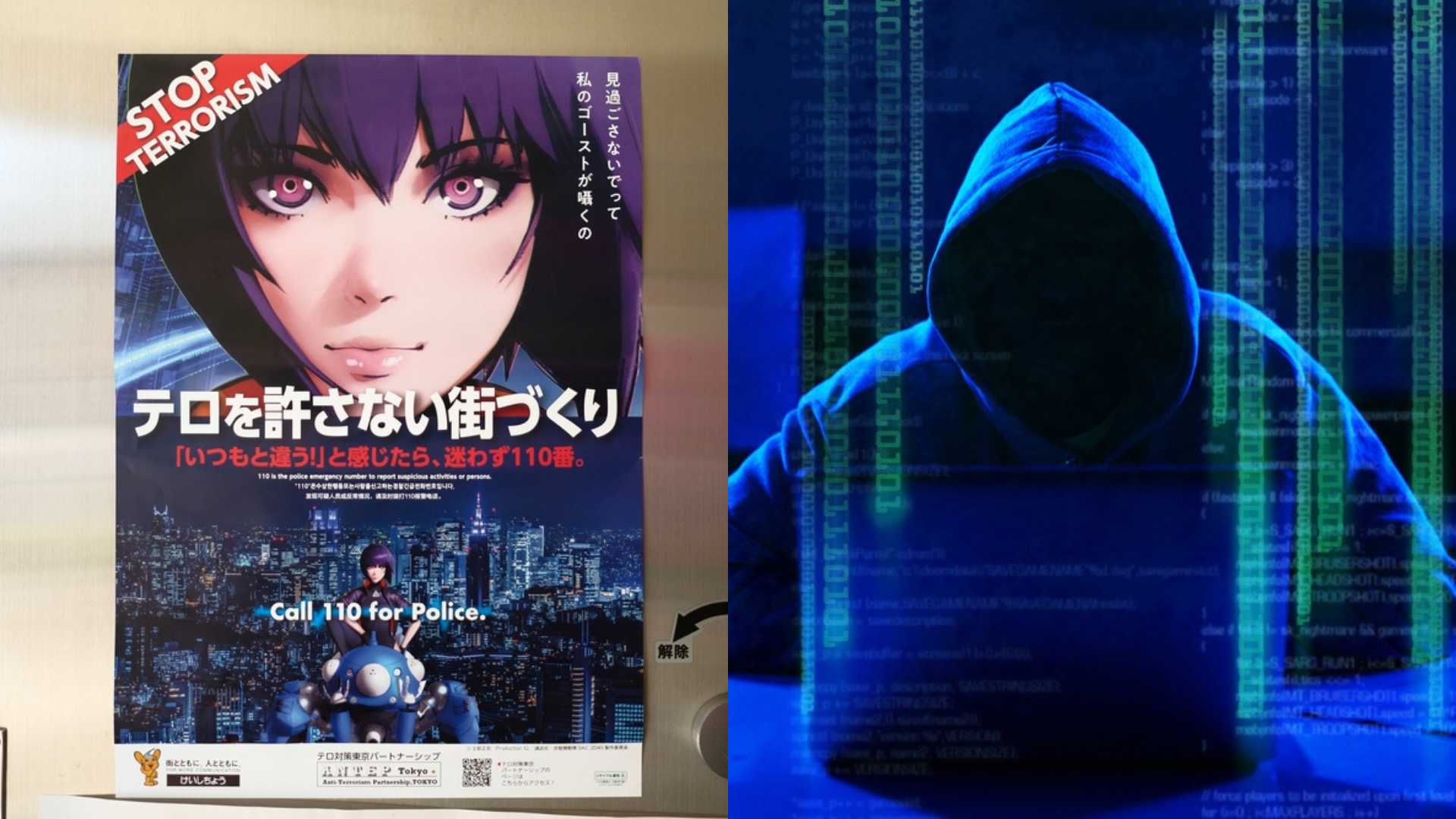
Thirty years ago, before most people had ever heard the term “cybersecurity,” a Japanese anime depicted a world in which governments conducted clandestine digital operations, hackers could take over your mind, and artificial intelligence made it difficult to distinguish between humans and machines. In retrospect, that anime—Ghost in the Shell—feels less like fiction and more like a time capsule filled with realized prophecies.
A World Without the Web… Yet Ghost in the Shell Saw What Was Coming
The World Wide Web was hardly an idea on paper when the first manga chapters that served as the basis for the Puppet Master plot were released in 1989. Only computer scientists and a few government researchers were familiar with the specialized concepts of cyberattacks, malware, and digital espionage.
However, Ghost in the Shell boldly and meticulously explored these concepts. The Puppet Master, the main adversary, exhibits behavior that is nearly identical to that of an advanced persistent threat (APT), typically connected to hackers with government support. The twist? Japan’s Ministry of Foreign Affairs produced the Puppet Master.
This mirrors modern concerns about state-sponsored hacking: cyber tools built for defense or surveillance can leak into the wild or be abused, becoming the very threats they were meant to stop.
Predicting Malware Defense Before It Became a Business
In the narrative, authorities discuss developing a specialized “anti-puppeteer” defense by analyzing the Puppet Master’s behavior and code patterns. This is remarkably similar to how cybersecurity firms now identify malware—through behavior-based heuristics and signature matching.
This idea wasn’t widely understood in 1989. Antivirus tools barely existed. Yet Ghost in the Shell described this strategy long before the cybersecurity industry adopted it.
Hacking for Surveillance, Spying, and… Jealousy?
Another striking example appears in Major Motoko Kusanagi’s early investigation. She tracks a garbage truck by infiltrating a government network—exactly the kind of targeted surveillance intelligence agencies now conduct. Advanced hackers often breach large systems not to steal everything, but to reach one specific device or communication channel.
Meanwhile, a garbage collector admits to hacking his wife’s cybernetic brain out of jealousy. This closely resembles modern concerns about stalkerware and tech-enabled domestic abuse.
The twist: the man was never married. The Puppet Master implanted false memories and used him as a disposable pawn—much like how modern attackers infiltrate smaller networks to pivot toward more important targets.
A Hacker’s Playground Full of Real-Life Techniques
Cybersecurity expert John Wilander once analyzed the film and highlighted numerous real-world tactics portrayed in it:
- reusing old exploits to confuse investigators
- studying malware without alerting its creator
- infecting oneself during research
- digital espionage between rival companies
None of these were part of public discussion in the mid-90s, yet the film seamlessly incorporated them.
Then It Went Even Further: AI, Identity, and Consciousness
The manga and movie venture into philosophical territory while maintaining technical accuracy. Ultimately, the Puppet Master is revealed as a self-aware AI capable of seeking political asylum and proposing a literal merging of minds with Major Kusanagi.
While we aren’t yet debating AI citizenship, today’s discussions about AI autonomy, rights, and agency echo ideas Ghost in the Shell explored decades ago.
A Creator Ahead of His Time
Masamune Shirow never fully explained the inspiration behind his cyberpunk vision, but it is clear he was paying attention to early whispers of the digital underground. He imagined a world shaped by hacking, espionage, and artificial intelligence long before the public ever logged onto the internet.
And in many ways, that world is now our reality.
The Legacy: Fiction That Became a Cybersecurity Blueprint
Few works of fiction predict the future with such accuracy. Ghost in the Shell didn’t just anticipate trends—it captured the essence of the internet age before it arrived:
- government-linked hackers
- electronic surveillance
- technology exploiting human weakness
- malware-defense strategies
- AI challenging human identity
Thirty years later, the anime feels less like vintage cyberpunk and more like a manual for understanding today’s digital threats.
Because of this, Ghost in the Shell remains not just a cult classic, but one of the most eerily prophetic pieces of science fiction ever created.


-
 Credit: Shutterstock In a digital age where even our doorbells are online, today felt like the internet collectively hit...
 -
Credit: Shutterstock Spotify is making it even easier (and more fun) to get the perfect playlist going. The streaming...
-
Credit: Shutterstock When Matt and Maria Raine lost their 16-year-old son Adam to suicide this past April, they were...
-
Credit: Shutterstock At its Made by Google 2025 event, Google pulled back the curtain on its latest foldable device,...
-
Credit: Shutterstock Paralyzed Woman Stuns the World Using Elon Musk’s Neuralink Chip In an awe-inspiring moment that blends science...
-
Credit: Shutterstock What’s on your mind today? Chances are, you’re not alone if you’ve turned to ChatGPT for answers....
-
Credit: Unsplash Japan Is Living In the Future Japan just broke the internet speed record by reaching 1.02 petabits...
-
Credit: Envato Elements Calling All Builders — Hugging Face’s DIY Robot Kit Is Now Available Imagine having a curious...
-
Credit: Unsplash Is This New Bill Going to Be a Problem for Americans? AI is creeping into every part...
-
Credit: Unsplash Microsoft Layoffs Are Coming Again; Here’s What We Know Microsoft is letting go of thousands of employees,...
-
Credit: Unsplash Is This a Good Idea? Many Americans Don’t Think So Microsoft’s AI is officially heading to the...
-
Credit: Shutterstock Nintendo is officially rolling the dice on the future of gaming—again. With the upcoming launch of the...