

Mayor Muriel Bowser took a sharply different tone Tuesday night, urging residents to “protect our city” in the face of what she called an “authoritarian push” from President Trump’s federal takeover of the capital.
Speaking during a virtual town hall, Bowser told community members — including faith leaders — that this was “a time when the community needs to jump in” to safeguard DC’s autonomy and home rule. She went further, encouraging citizens to “get to the other side of this guy” by electing a Democratic House to act as a safeguard.
Her comments came just hours after camouflaged National Guard troops rolled into the city Tuesday evening. By nightfall, military Humvees were parked on the National Mall, while other officers — from what appeared to be various agencies — stopped cars, spoke with residents, and conducted searches. Pentagon sources have suggested the patrol was a “presence mission” that lasted roughly two hours.
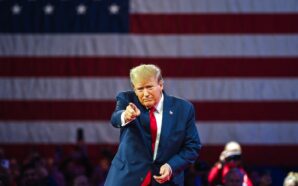
The troop arrival follows Trump’s announcement of a sweeping crime crackdown, which he said was necessary to “rescue our nation’s capital from crime, bloodshed, bedlam, and squalor.” Flanked by key cabinet officials, Trump pledged aggressive tactics against offenders, vowed to clear homeless encampments from public spaces, and teased that the same approach could be taken in cities like New York, Chicago, and Los Angeles.
According to FBI Director Kash Patel, 23 arrests have been made so far, ranging from firearms charges to outstanding warrants. Patel called it just “the start” of what the administration describes as a citywide cleanup.
Bowser, however, disputes the White House’s portrayal of DC’s crime problem. She points to police data showing violent crime is down 26% this year, hitting a 30-year low in 2024, with homicides falling from 274 in 2023 to 190 in 2024.
“This is unprecedented, but sadly not surprising,” she had said earlier this week, before ramping up her criticism on Tuesday night.
Meanwhile, leaked Pentagon documents hint at broader ambitions — a “Domestic Civil Disturbance Quick Reaction Force” capable of deploying 600 troops anywhere in the country within an hour. While such a force would take years to stand up, Trump has signaled interest in expanding federal intervention far beyond the capital.
As the debate over public safety and federal power intensifies, Bowser’s message to residents is clear: the fight for DC’s autonomy is no longer a distant policy discussion — it’s here, on the streets, right now.


-
 Election season always brings strong opinions, and this year’s California primary elections were no exception. Following several closely watched...
 -
On Tuesday, the White House introduced a major update to cybersecurity regulations targeting the protection of advanced artificial intelligence...
-
A United Airlines flight faced a tense situation on Saturday evening when a passenger tried to get into the...
-
A high-intensity security incident unfolded in Washington, D.C., on Saturday evening, drawing immediate attention and a swift law enforcement...
-
A routine military demonstration at Mountain Home Air Force Base in western Idaho took a dramatic turn over the...
-
A rare hantavirus outbreak linked to the M/V Hondius cruise ship has moved from a medical emergency at sea...
-
On April 1, the U.S. Supreme Court began hearing arguments in one of the year’s most high-stakes legal battles:...
-
A highly anticipated diplomatic summit between the United States and Iran in Islamabad collapsed before formal talks could even...
-
Todd Lyons, the acting director of U.S. Immigration and Customs Enforcement (ICE), announced that he will step down at...
-
On Sunday night, April 13, President Donald Trump ignited a major online controversy after posting an AI-generated image on...
-
The Springs Fire near Moreno Valley, California, which began on April 4, was brought under control quickly thanks to...
-
Over the weekend of March 28–29, large-scale “No Kings” protests took place across the United States, drawing millions of...