

Credit: Shutterstock
As the United States prepares to celebrate Independence Day, financial markets take a pause. In 2026, the holiday falls on a Saturday, which means major U.S. stock and bond markets closed their doors early for a long weekend. This temporary shutdown gives traders, investors, and market professionals a chance to step back, but it also affects trading volumes and market dynamics leading up to the break.
Early Closures
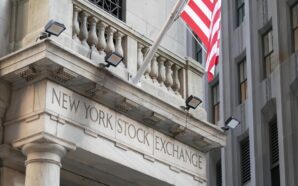
Ahead of the long weekend, bond markets closed early on Thursday at 2:00 p.m. Eastern time. This early close allowed traders to adjust positions and reduce exposure before the holiday. Stock exchanges like the NYSE and Nasdaq also saw thinner activity on Friday as many investors chose to avoid last-minute trades. The reduced activity is a normal part of the pre-holiday rhythm and is designed to ensure orderly markets during a period of lower participation.
Complete Shutdown
From Friday, July 3, through the weekend, trading on major U.S. stock and bond markets remained frozen. No buying or selling occurred during this period, giving everyone a chance to celebrate the holiday without the pressures of market fluctuations. Trading resumed on Monday, July 6, allowing investors to return refreshed and ready to engage with new market developments.
Impact on Investors
The holiday closure does not usually affect long-term investment strategies, but it can influence short-term trading decisions. Traders who rely on daily price movements or high-frequency strategies may adjust their positions in advance. Market participants often reduce leverage or limit exposure to mitigate risk during periods of low liquidity. This temporary pause can also create slight adjustments in futures and options pricing as traders anticipate market reopening.
Planning for the Long Weekend
For individual investors and portfolio managers, the long weekend is an opportunity to review strategies and assess positions. Some may take the time to rebalance portfolios or research potential opportunities. The break also provides time for reflection, helping investors avoid making impulsive decisions during a busy week. Even casual investors can benefit from a short pause to consider market trends and long-term goals.
Market Behavior After Holidays
Historically, markets may experience slight volatility following long holiday breaks. Reopening often brings a burst of trading activity as investors respond to news and price movements from the days when markets were closed. While these movements are usually temporary, understanding the rhythm of holiday closures can help investors prepare and make informed decisions.
Broader Significance
Independence Day is more than just a market closure; it reflects the intersection of national tradition and financial life. The pause allows everyone involved in trading and finance to celebrate the holiday while maintaining the integrity of the markets. It is a reminder that markets operate within a broader societal context and that taking a break is sometimes necessary for balance and perspective.
Markets freezing for the Independence Day long weekend is a predictable but important event for investors and traders. Early closures, reduced volumes, and temporary pauses all help ensure orderly operations. By understanding how the holiday affects trading, investors can plan ahead, manage risk, and return to the market ready to engage with new opportunities.


-
 The U.S. dollar surged in early July as investors sought safety amid ongoing geopolitical tensions in the Gulf. The...
 -
The Japanese yen has fallen to its weakest level against the U.S. dollar in nearly four decades, marking a...
-
Global stock markets experienced a wave of optimism following the announcement of a diplomatic breakthrough aimed at stabilizing key...
-
For months, many investors hoped inflation would continue cooling and open the door for interest rate cuts from the...
-
Wednesday marked a significant day in the financial and private equity sectors, as two major events captured attention across...
-
Mid-week, the spotlight shifted to regulation as the U.S. Senate moved forward with a pivotal vote on digital assets....
-
On Wednesday, April 29, the Federal Open Market Committee wrapped up its closely watched two-day meeting with a decision...
-
On April 21, 2026, the company Strategy, an evolution of the MicroStrategy model, made a massive splash in the...
-
Netflix shares came under pressure on April 15 after the company released its latest quarterly earnings and announced a...
-
Credit: Shutterstock This is the kind of market reaction investors often hope for: strong economic data without a panic...
-
Wall Street kicked off the second quarter with one of its strongest opening sessions in months, delivering a sharp...
-
Where it begins There is a particular kind of developer in Philadelphia that does not announce itself loudly. Rather,...