

In partnership with the Canadian Space Agency, NASA introduced the Deep Space Food Challenge, a novel program accepting global submissions. The contest is now in its final and second phase. Phase two opened in January 2022 and is comprised of 11 finalists. Finalists will present their work at the NYCxDESIGN Festival in New York. On Friday, May 19th, the phase two winning teams will be announced at the event, which can be viewed via an online Zoom starting at 12 PM EDT.
What healthy and sustainable ways would you use to keep astronauts fed on long-duration missions to the Moon, Mars, and beyond?
The Phase 2 winners of our Deep Space Food Challenge will be revealed live Friday, May 19, at the #NYCxDESIGN Festival: https://t.co/cp6nP8iWn3 pic.twitter.com/IdjfMiaAWZ
— NASA (@NASA) May 18, 2023
The Deep Space Food Challenge participants strive to offer solutions for future space missions by introducing imaginative, new techniques and strategies for food supplies and nutritious and sustainable solutions for future space travelers on long-term trips. The purpose of these new processes would be to create new technologies or methods for food production that require negligible resources and deliver minor waste.
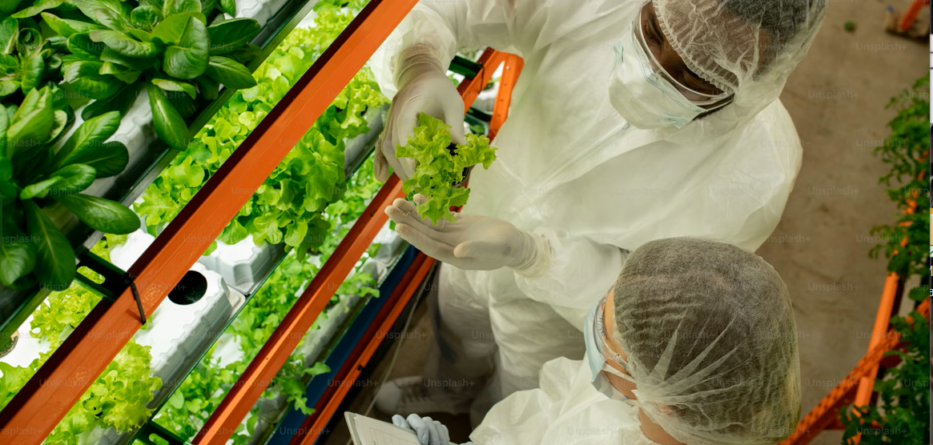
Some of the solutions in play include systems that produce food utilizing compounds like fungal proteins and carbon dioxide. In addition, a closed-looped system was conceived to grow and maintain vegetables and greens in a space mission environment. A panel of adept judges with specializations in various academic, government, and industry areas will assess the teams’ proposals. The measures they will consider include innovation in design, scientific and technical approaches as well as the practicality and viability of their design.
The Deep Space Food Challenge is all about feeding the interplanetary humans of tomorrow! Here's a refresher on the importance of food technology before our winner’s announcement tomorrow! pic.twitter.com/TfC4o9csFV
— Centennial Challenge (@NASAPrize) May 18, 2023
Phase two finalists will be visited in their facilities by judges. Finalists will present a demonstration to display their technology as well as the simplicity and ease of the process for their food production. Potentially up to five of the highest-scoring U.S. teams will be acknowledged as winners of the phase two challenge. Each winner would be awarded $150,000. In addition, up to three highest-scoring global teams will be identified as winners of the phase two challenge.
-
The 18th BRICS Summit concluded in New Delhi on September 13 after two days of discussions involving some of...
-
A quarter of a century has now passed since September 11, 2001. On September 11, 2026, Americans marked the...
-
The H-1B visa program is back at the center of the U.S. immigration and employment debate. A presidential proclamation...
-
The scale of the disaster unfolding across the Himalayas has become clearer, and the numbers are devastating. By September...
-
The United States and Venezuela have entered a sweeping energy agreement that could reshape the relationship between the two...
-
Severe weather has caused serious disruption across parts of Western Europe and Asia, with communities in Germany and China...
-
Singapore’s death penalty policies are once again under international attention. On August 18, independent United Nations human rights experts...
-
The United States has temporarily stepped back from imposing new 50% tariffs on around $20 billion worth of Canadian...
-
A powerful 7.4-magnitude earthquake struck western Colombia on August 10, shaking cities across the country and sending tremors into...
-
The Boeing 737 MAX is facing another round of regulatory attention in the United States. The Federal Aviation Administration...
-
The United Kingdom’s AI Safety and Security Institute has released new evaluation findings examining how advanced artificial intelligence models...
-
Federal authorities have launched investigations into a series of cyber intrusions targeting municipal water treatment facilities across several U.S....