
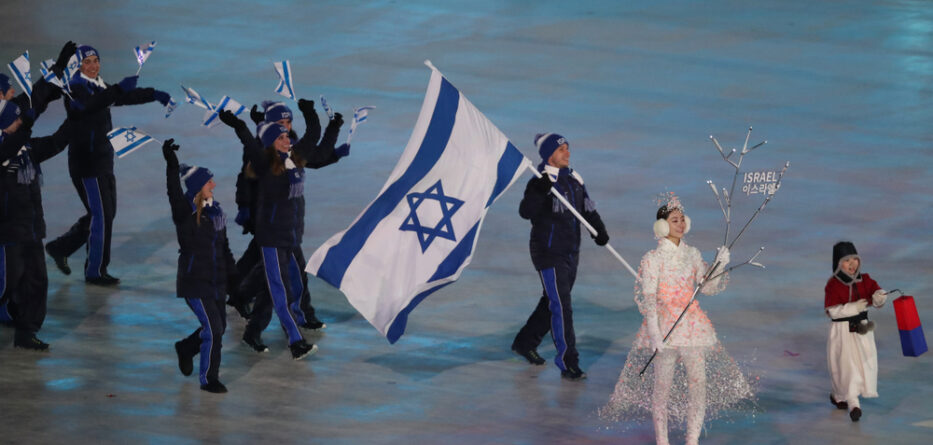
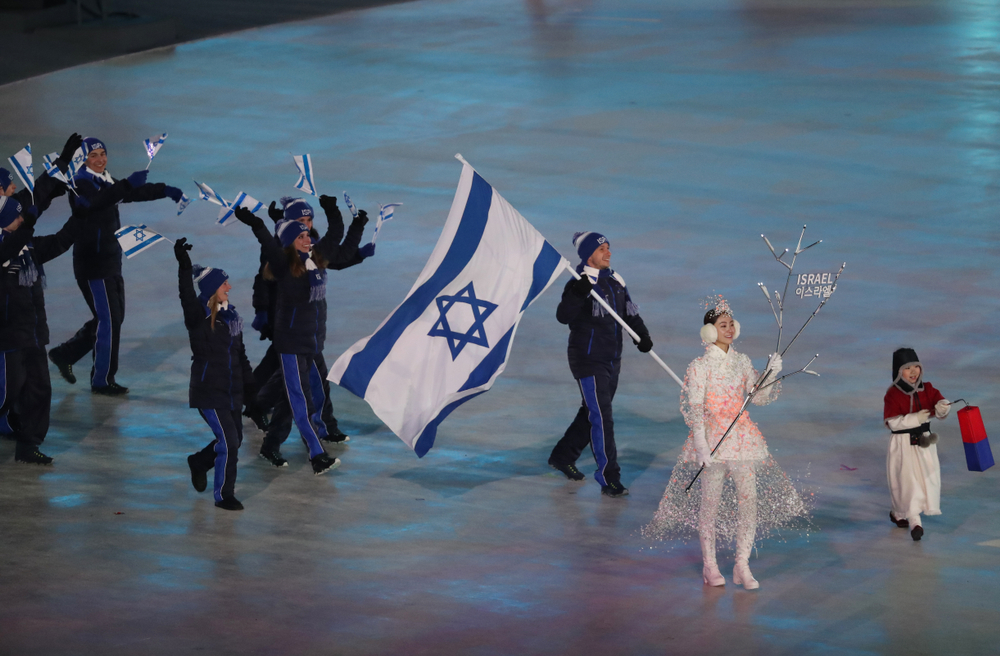
The Winter Games delivered more than high-speed thrills this week as Israel’s history-making bobsleigh team found itself at the center of a global conversation that stretched far beyond the ice track.
During the two-man bobsleigh event at the Milano-Cortina Olympics, Swiss broadcaster Stefan Renna of Radio Télévision Suisse devoted roughly 90 seconds of live commentary to the social media activity of Israeli pilot Adam Edelman, questioning his eligibility under International Olympic Committee participation standards.
Edelman, a dual U.S.-Israeli citizen and Israel Defense Forces reservist, has publicly described himself as a “Zionist to the core” and referred to Israel’s military campaign in Gaza as “the most morally just war in history.” Renna cited those remarks on air while Edelman was mid-run, also referencing prior IOC rulings involving athlete conduct and political messaging at competition venues.
🇮🇱🇨🇭 This Swiss commentator has balls of steel. While the Israeli bobsleigh team was racing, he kept reminding viewers of the war crimes the pilot has openly supported.
Absolute legend! pic.twitter.com/5aYOqJOKrK
— Dr. Simon Goddek (@goddek) February 16, 2026
The broadcast quickly ignited debate across social media and within Olympic circles. Supporters of Renna praised what they described as a call for consistency in how the International Olympic Committee applies its neutrality standards. Critics, meanwhile, characterized the commentary as inappropriate for live competition coverage, with some calling it discriminatory.
Edelman responded on X shortly after the race, dismissing the remarks as a “diatribe” and urging followers not to amplify them.
“I can’t help but notice the contrast,” he wrote. “Shul Runnings is a team of six proud Israelis who’ve made it to the Olympic stage — no coach, no big program, just a dream and grit.”
The Israeli team, nicknamed “Shul Runnings,” marked the nation’s Olympic debut in bobsleigh. Edelman and teammate Menachem Chen finished 26th in the two-man event after two heats at the Eugenio Monti Sliding Centre, nearly five seconds behind leaders from Germany — a sizable margin in sliding sports. Yet their reaction at the finish line was celebratory.
“We are victors, not victims,” Edelman said after stepping out of the sled with a smile.
For Edelman, who previously represented Israel in skeleton at the 2018 Winter Games, the mission has always been larger than podium contention. Sliding sports are notoriously expensive, and Israel’s fledgling program operates without a full-time coach. The team secured its Olympic berth against long odds and even dealt with logistical setbacks during training.
“Contending isn’t the expectation. Representing is,” a member of the Israeli delegation noted.
Israel’s presence in international competition has faced heightened scrutiny amid the ongoing war in Gaza, which according to Gaza’s health ministry has resulted in more than 71,800 Palestinian deaths and widespread devastation. The conflict has triggered boycotts and protests in various sporting arenas worldwide.
Renna’s commentary also referenced past Olympic controversies involving athlete expression, drawing parallels to IOC enforcement of rules surrounding political displays. The situation underscores a longstanding reality: while the Olympic Charter emphasizes neutrality, sport and geopolitics often intersect in unavoidable ways.
As the four-man bobsleigh event approaches, Edelman says his focus remains squarely on performance.
“We always want to be the first, but not the last,” he said. “Now we’ve set a precedent. Others can come after us.”
Whether remembered for their finishing time or for the wider debate they sparked, Israel’s inaugural Olympic bobsleigh team has undeniably made an impact — on the ice and beyond.

-
 Credit: Shutterstock Following a horrifying road accident involving Umrah pilgrims on the Mecca–Madinah highway late Sunday night, India is...
 -
Credit: Shutterstock The world is reeling from the irony this week after reports confirmed that over 100,000 trees were...
-
Credit: Shutterstock As Hurricane Melissa tore across the Atlantic, shattering records and testing the limits of modern aircraft, a...
-
Credit: Shutterstock Royal Lodge Shake-Up: Andrew and Fergie Plan Their Exit In a development that has stirred fresh waves...
-
Credit: Shutterstock Phil Mickelson isn’t just swinging golf clubs these days — he’s swinging at political rivals too. The...
-
Credit: Shutterstock Hamas Violence Sparks Fears of Peace Deal Collapse Amid Growing Power Struggle in Gaza Alarming new footage...
-
Credit: Shutterstock Muswell Hill had a lovely start to the Monday morning. Sunlight danced off the windows, the sky...
-
Credit: Shutterstock Global music sensation Bad Bunny is proving once again that laughter is the best comeback. Hosting Saturday...
-
Credit: Shutterstock Trump’s Ironic Statements at the UN President Donald Trump shook up the United Nations General Assembly this...
-
Credit: Shutterstock Is Israel Really Our Ally? Israel’s airstrikes on Doha, Qatar, on September 9, 2025, didn’t just eliminate...
-
Credit: Shutterstock Tensions flared overnight as U.S. President Donald Trump condemned Israel’s surprise airstrikes in Qatar, which left five...
-
Credit: Shutterstock Lewis Hamilton’s much-anticipated move to Ferrari was always going to attract headlines, and halfway through his debut...