Credit: Shutterstock
Brazil has entered a period of political tension following its presidential runoff on October 25, 2026, after incumbent President Luiz Inácio Lula da Silva secured reelection against Senator Flávio Bolsonaro.
Although Brazil’s electoral authorities officially declared Lula the winner, Bolsonaro refused to concede and announced plans to challenge the results.
The dispute has placed renewed attention on the country’s electoral institutions, political divisions, and the challenges facing Lula as he prepares for another presidential term.
Lula Secures a Fourth Presidential Term
Brazil’s Superior Electoral Court confirmed Lula’s victory with 51.79% of valid votes, compared with 48.21% for Bolsonaro.
The president received approximately 64.3 million votes, defeating his opponent by more than 4.4 million.
The result marked a significant political comeback for Lula, who had finished behind Bolsonaro in the first round on October 4.
His victory secured a historic fourth, nonconsecutive presidential term and demonstrated the continued competitiveness of Brazil’s political landscape.
Bolsonaro Challenges the Election Results
Following the announcement, Flávio Bolsonaro publicly rejected the outcome and said he would pursue legal action to annul the election.
His objections centered on an emergency decision to extend voting hours by two hours at certain polling stations.
The extension followed reports of transportation difficulties affecting voters in parts of Brazil, including Bahia and São Paulo.
Bolsonaro argued that the late decision created unequal voting conditions.
However, the request for additional voting time had been supported by both presidential campaigns, including his own.
The dispute has raised questions about electoral procedures, although allegations of irregularities do not, by themselves, establish that the announced result was invalid.
Political Divisions Deepen in Brasília
The disagreement has intensified an already polarized political environment.
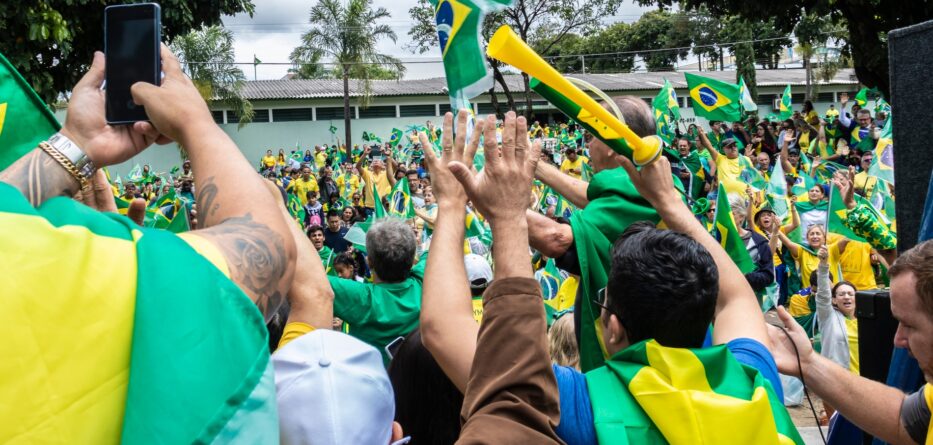
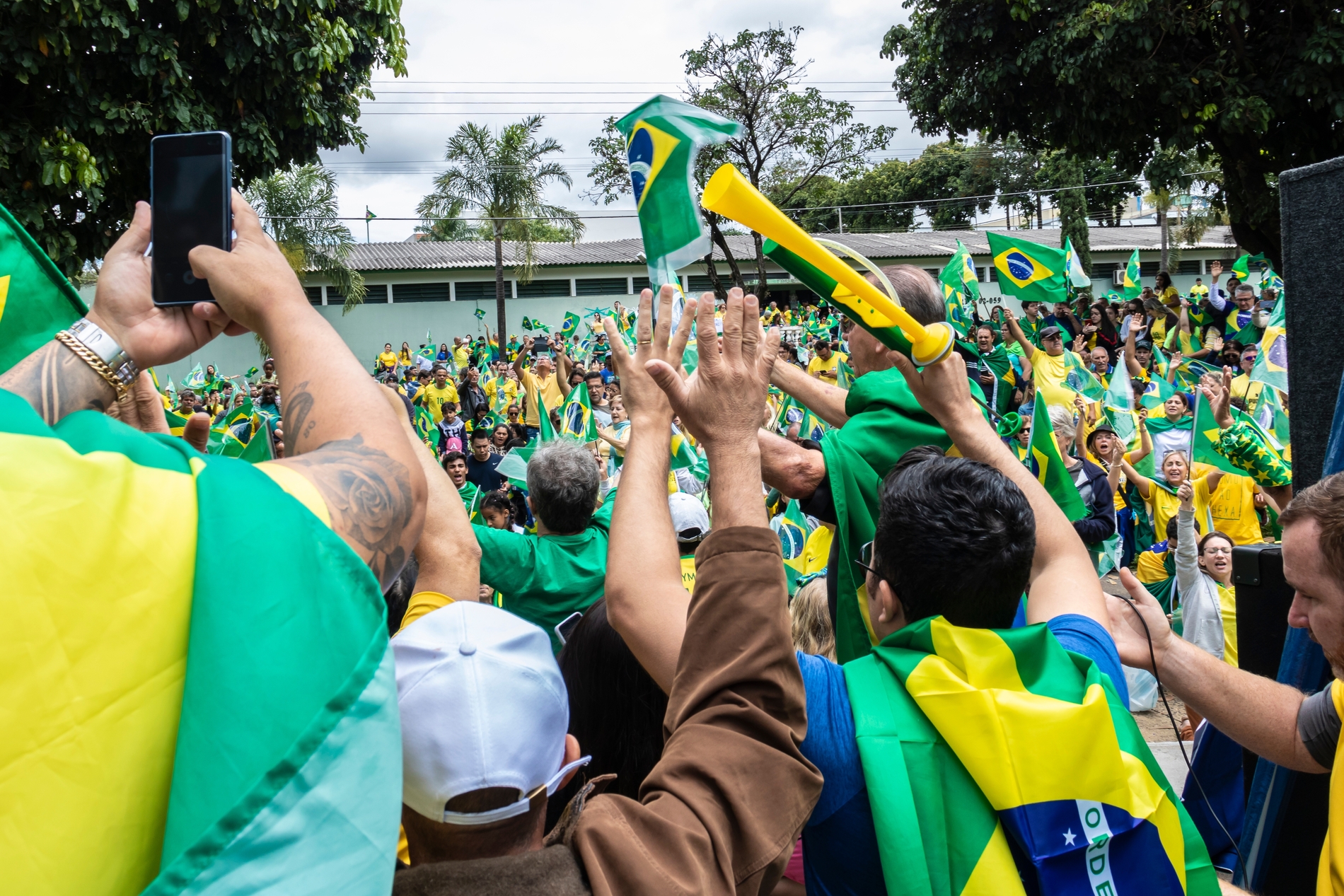
Supporters of Lula celebrated the president’s victory, while Bolsonaro’s refusal to concede renewed debates over the legitimacy of electoral institutions.
The dispute also carries historical significance.
Flávio Bolsonaro is the son of former President Jair Bolsonaro, who similarly refused to accept his defeat against Lula in the 2022 presidential election.
The younger Bolsonaro’s challenge has therefore revived concerns about political stability and the acceptance of democratic election results.
Bolsonaro’s Party Recognizes Lula’s Victory
Despite the candidate’s objections, his Liberal Party formally acknowledged the official election results.
Party president Valdemar Costa Neto stated that the organization accepted the outcome announced by Brazil’s electoral authorities while maintaining concerns about government spending during the campaign.
The distinction between the party’s position and Bolsonaro’s personal refusal to concede has become an important development.
Although the party intends to pursue questions through institutional channels, it has not endorsed the candidate’s demand for complete annulment.
The decision could influence how the opposition organizes itself during Lula’s next term.
International Observers Respond to the Dispute
International election observers have also addressed the controversy.
The Carter Center, which deployed an expert mission to Brazil, commended the country’s electoral authorities for administering the runoff and counting votes efficiently.
However, the organization acknowledged complications surrounding the last-minute extension of voting hours and noted inconsistencies in some election-related judicial decisions.
Its preliminary assessment emphasized that concerns should be addressed through established legal procedures and supported by evidence.
The organization also recognized that its limited mission did not constitute a comprehensive assessment of every aspect of the election.
Financial Markets React to Political Uncertainty
The election result also unsettled Brazil’s financial markets.
Investors had anticipated a possible change in government, making Lula’s victory an unexpected development for some market participants.
The Brazilian real experienced a sharp decline against the US dollar, while domestic stocks came under significant pressure.
Beyond the immediate market reaction, investors are watching how the administration will approach public spending, fiscal policy, and relations with Congress.
With opposition parties maintaining considerable legislative influence, Lula may face difficulties advancing parts of his political and economic agenda.
What Happens Next for Brazil?
Brazil’s political future now depends partly on how the electoral dispute develops through legal and institutional channels.
While Lula’s victory has been officially declared, Bolsonaro’s challenge and the country’s political divisions remain important concerns.
The president must also address economic pressures, public expectations, and a Congress containing a substantial opposition presence.
For Brazil, the coming months will test the ability of political leaders and institutions to manage disagreement while maintaining public confidence.
The presidential runoff may have determined the election’s winner, but the debate surrounding its aftermath is far from over.
-
 The United Kingdom’s political landscape has experienced a major change as Greater Manchester Mayor Andy Burnham prepares to step...
-
The 2026 NATO Summit officially began in Ankara, Turkey, drawing attention from world leaders, defense analysts, and media alike....
-
Europe is dealing with one of its harshest early-summer heat waves in years. What started as an intense spell...
-
In a dramatic turn of events off the coast of Oman on June 14, an Indian-flagged dhow sank in...
-
South Korea has taken a major step toward digital modernization with President Lee Jae-myung nominating Han Seong-sook as the...
-
Saudi Arabia’s economy has spent the past few years building a reputation for strength, reform, and steady growth. The...
-
Each year, millions of Muslims from around the world travel to Saudi Arabia to participate in the Hajj pilgrimage,...
-
Grassroots environmental movements in Europe have achieved a significant milestone within the European Union. On a recent decision in...
-
On May 12, 2026, Portugal saw a nationwide strike led by the Portuguese Nurses Union (SEP), coinciding with International...
-
On Sunday, April 5, the world of media and beyond mourned the loss of Ted Turner, the visionary founder...
-
SpaceX signaled a major shift in direction by officially expanding into a dedicated AI division, moving beyond automation tools...
-
Artificial Intelligence is becoming one of the biggest forces shaping healthcare across Europe, and new reports released through UN...